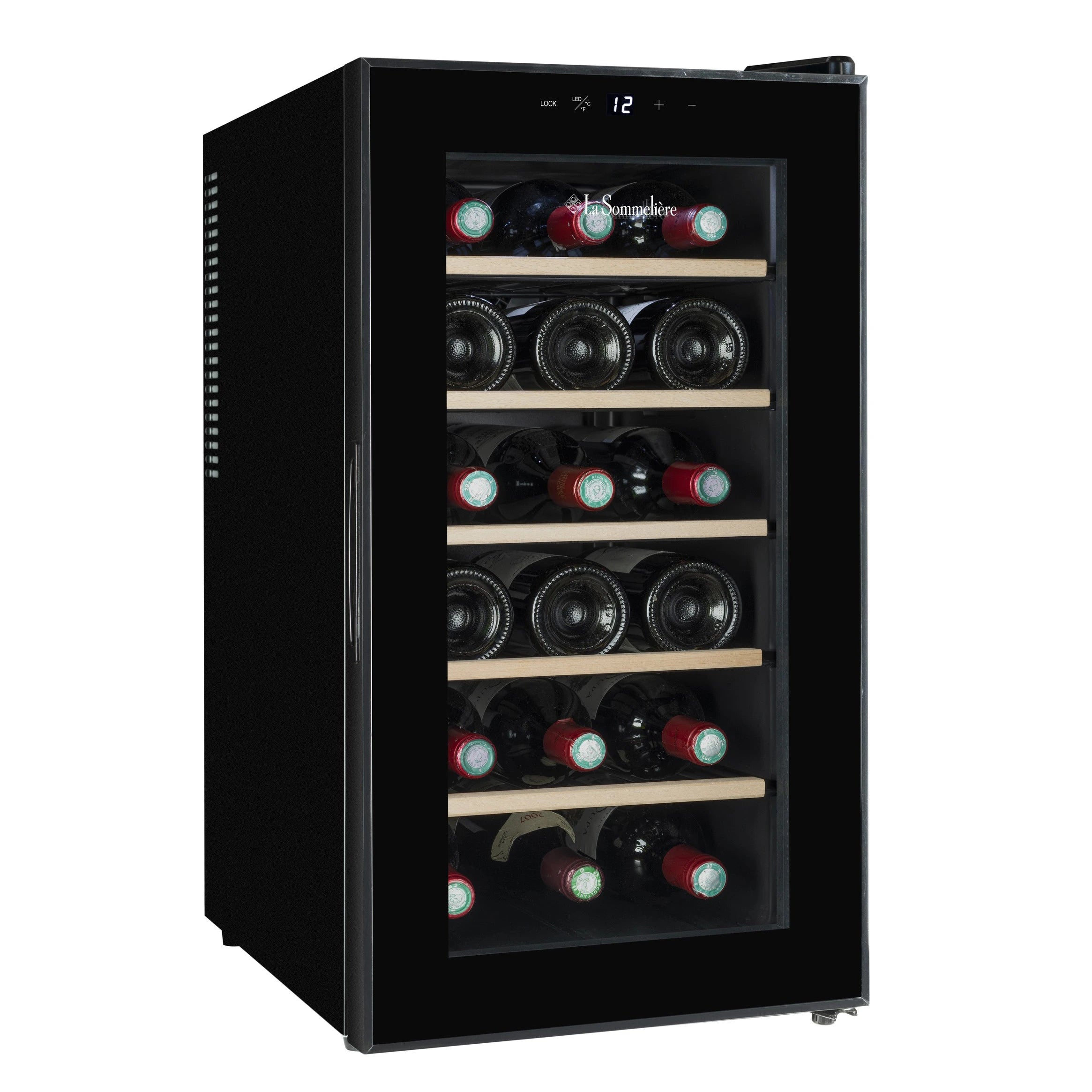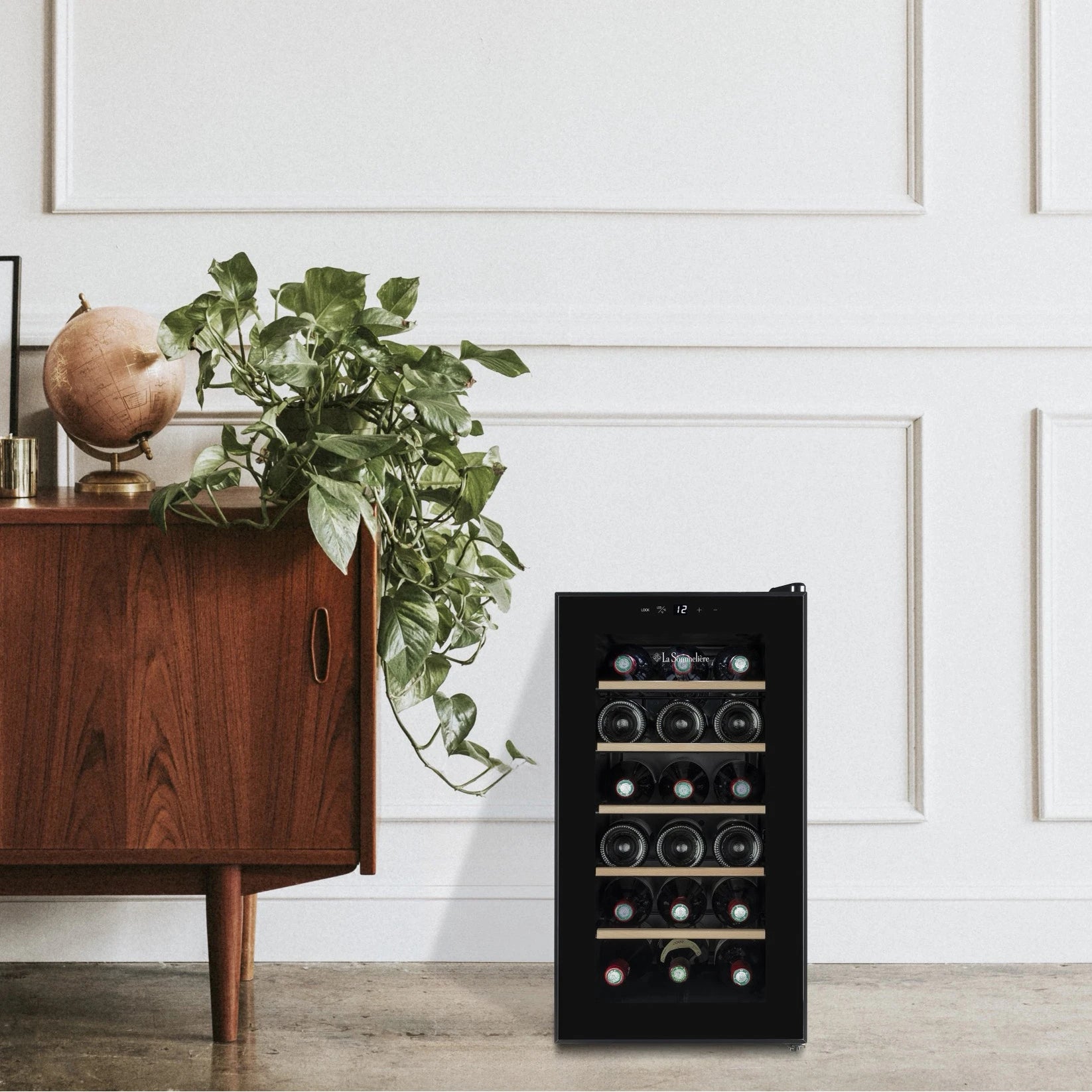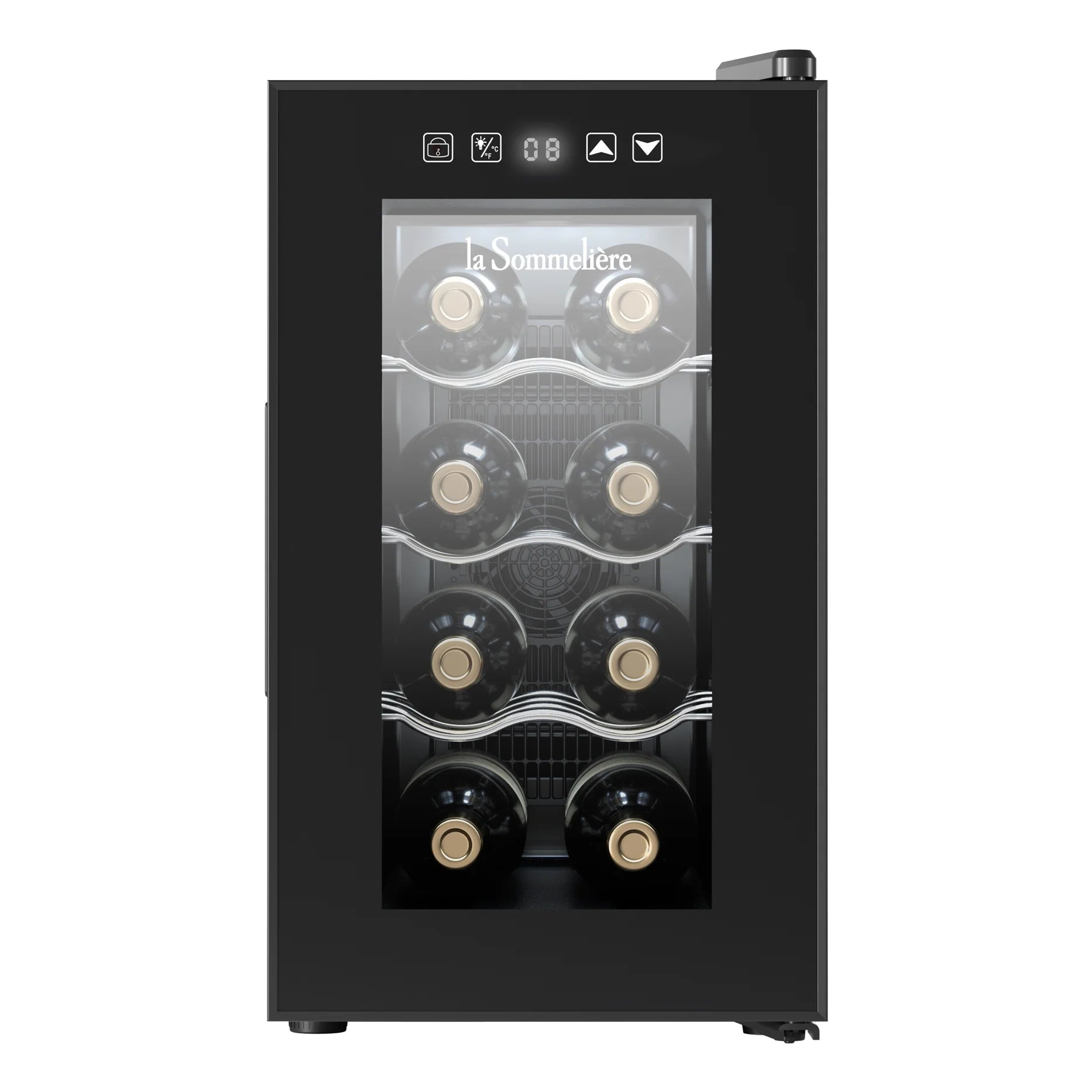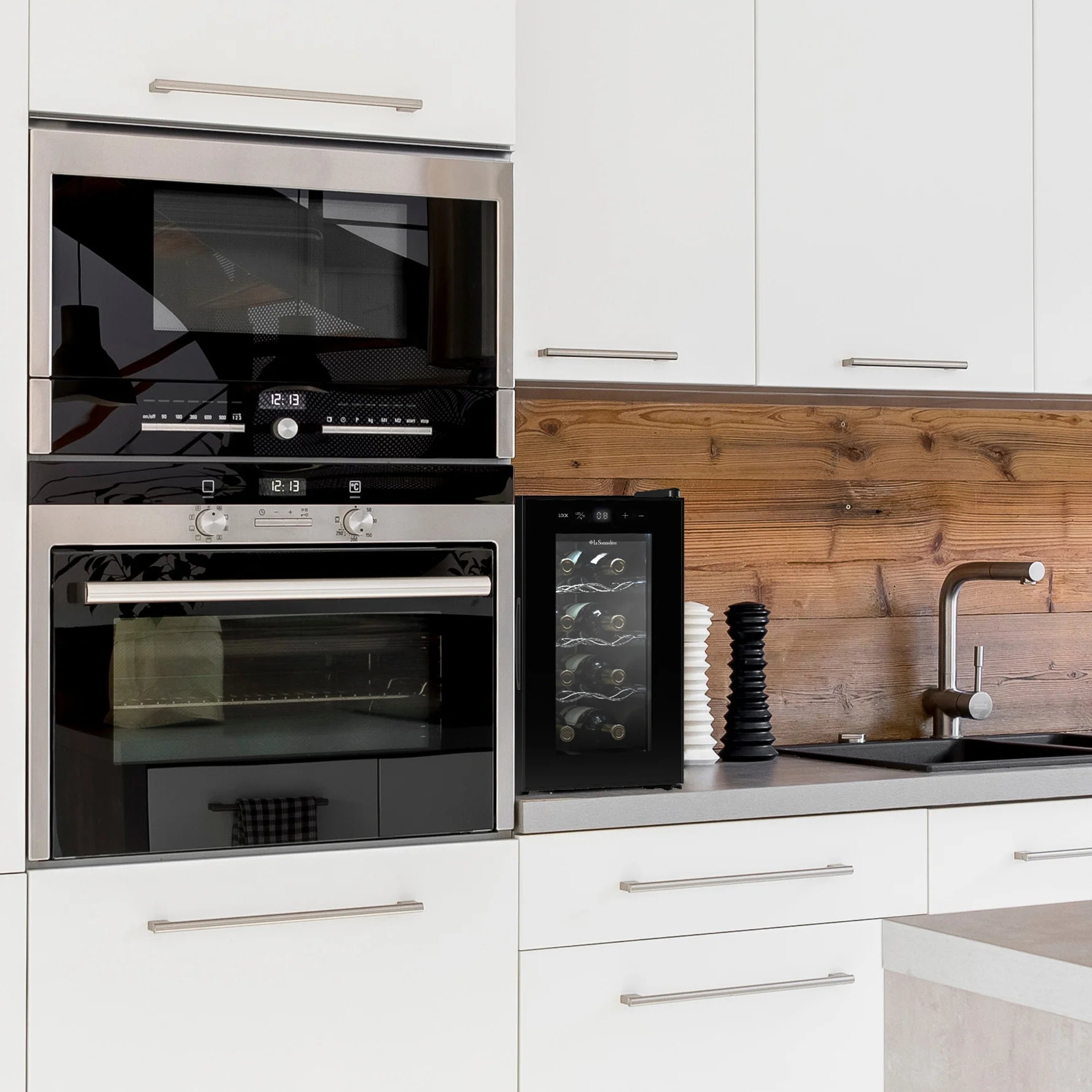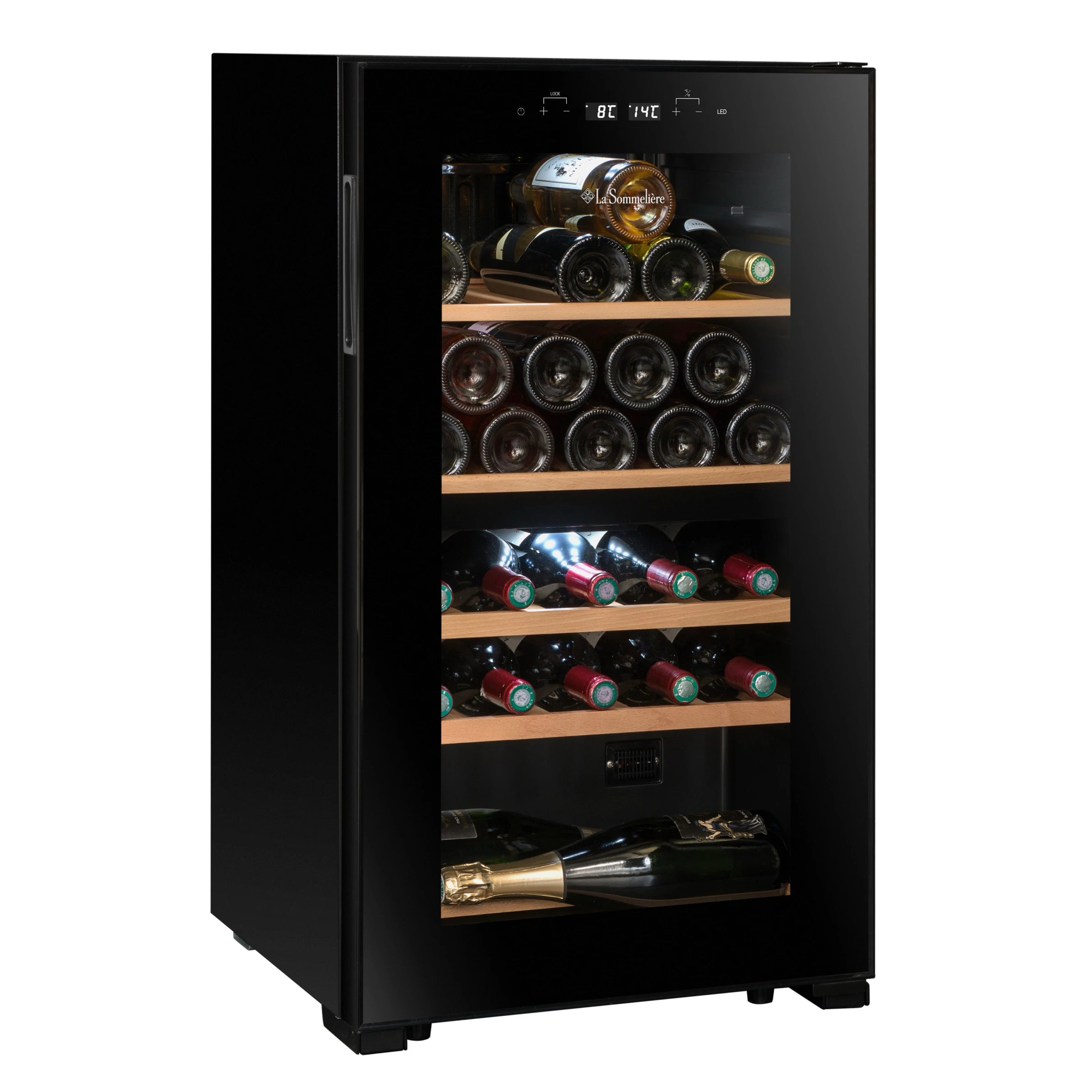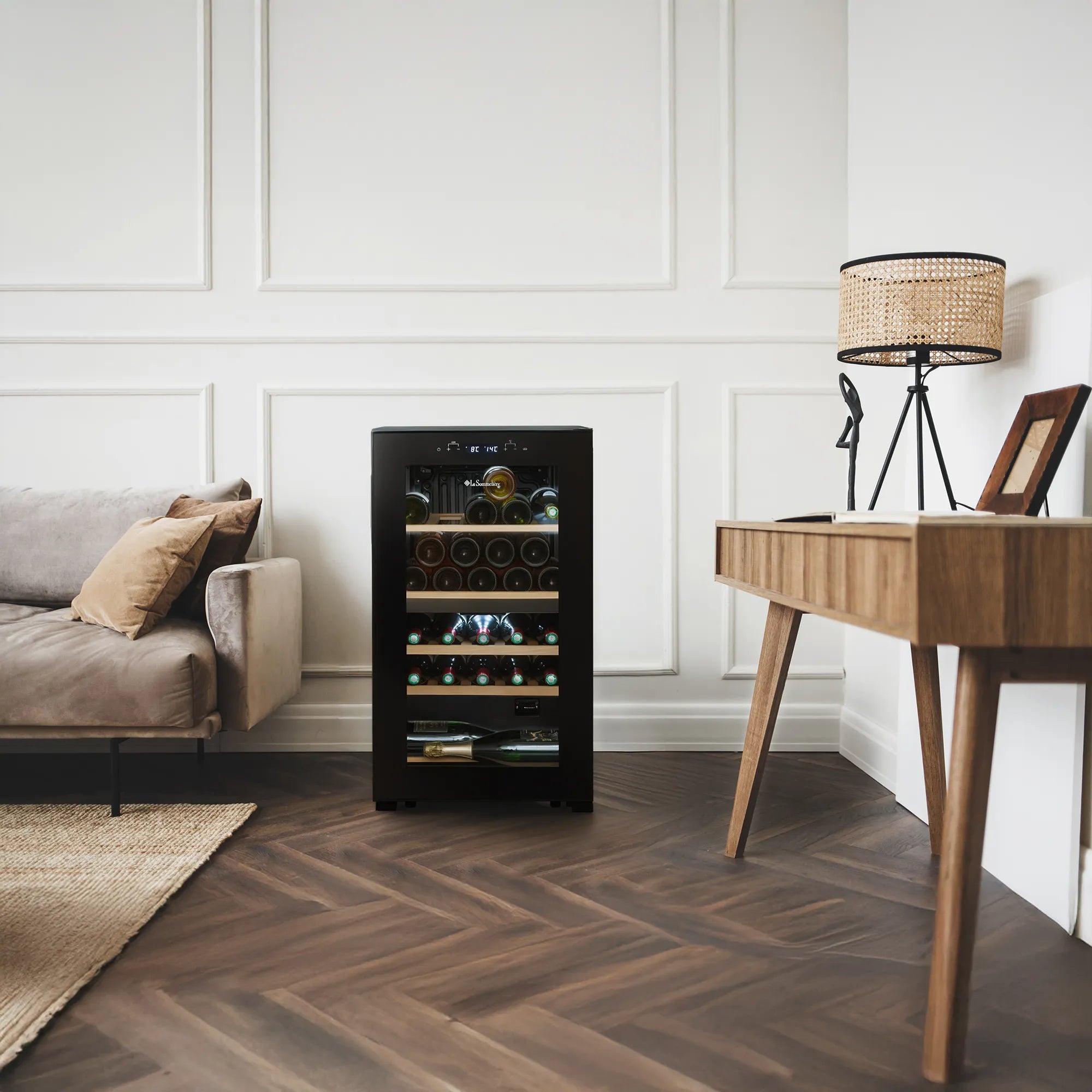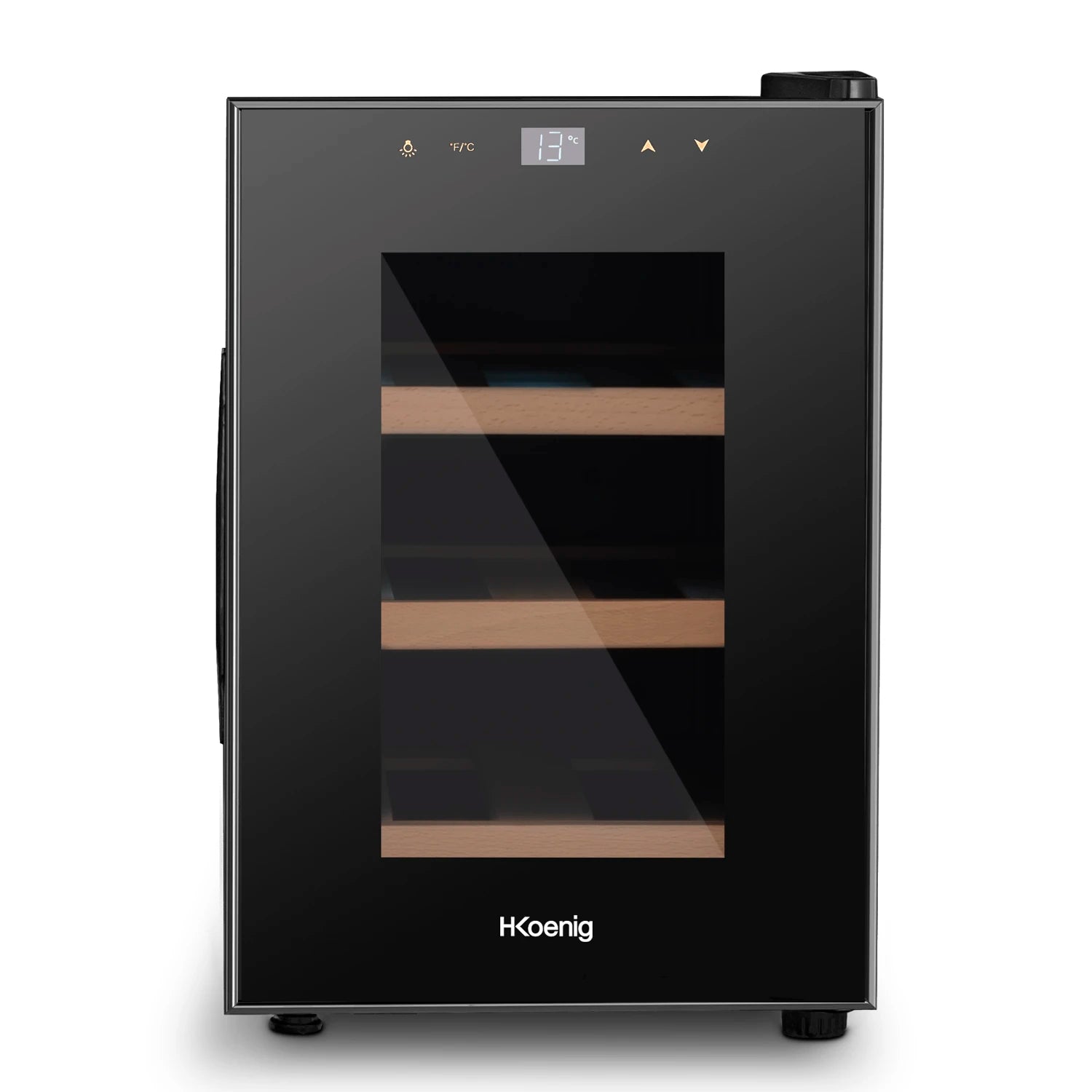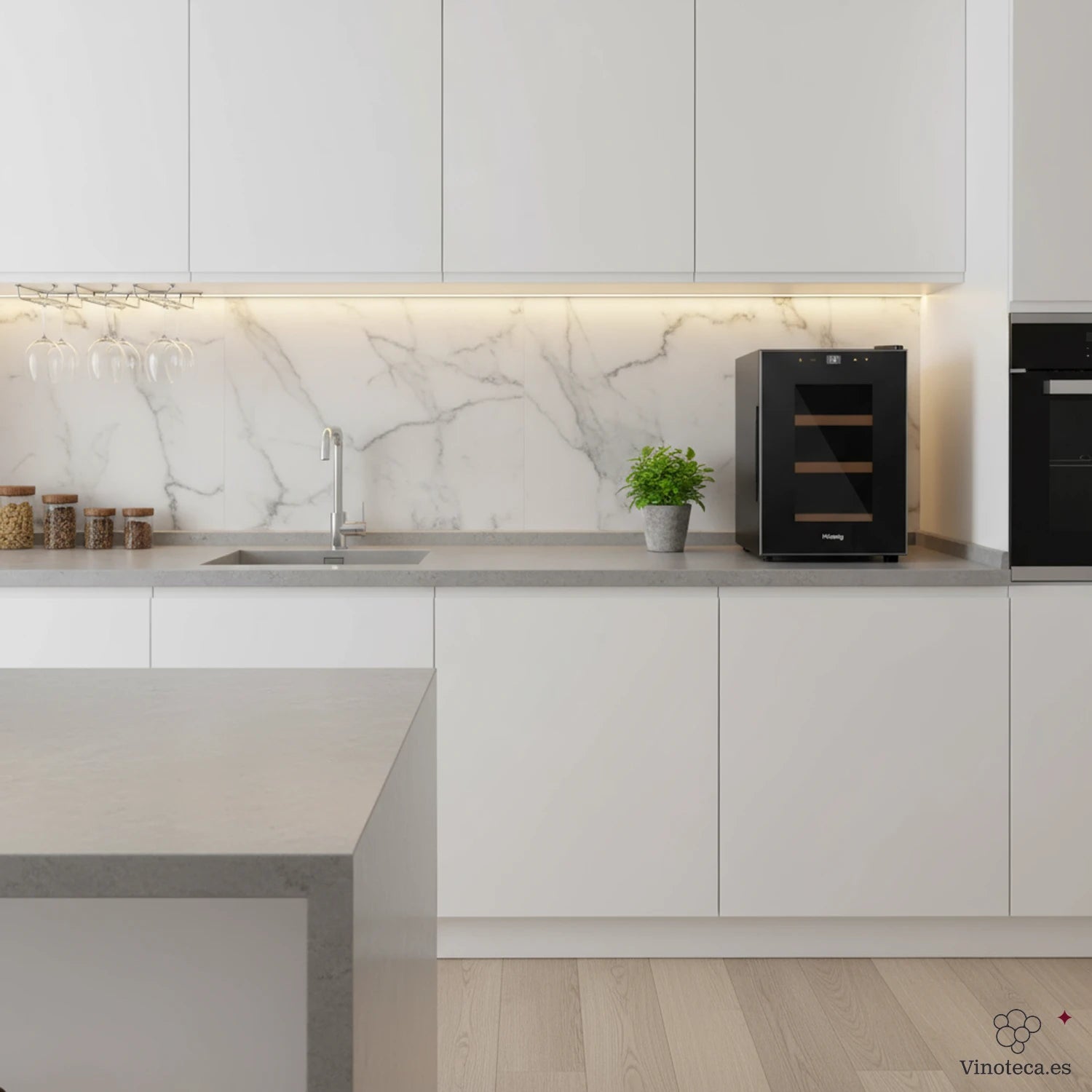
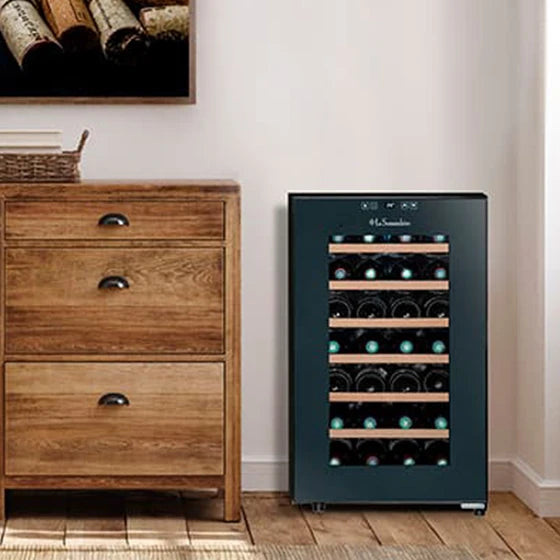


The ideal location for a wine cooler depends on its installation type, ventilation system and the ambient temperature range specified by the manufacturer. Choosing the right model for each space helps preserve wine at a stable temperature and supports efficient operation.
Where can a wine cooler be installed?
A wine cooler can be installed in a kitchen, living room, dining room, pantry, utility area or professional setting, provided that the model is suitable for the chosen location.
Before buying, check three essential factors:
- Installation type: freestanding, built under a worktop or built into a column.
- Ventilation system: front, rear, side or through airflow paths incorporated into the cabinetry.
- Climate class: the ambient temperature range within which the appliance is designed to operate correctly.

It is not enough for the wine cooler to fit physically into the available space. It must also have the ventilation it requires and be able to operate within the environmental conditions specified by the manufacturer.
Choosing the location according to the installation type
Freestanding wine coolers
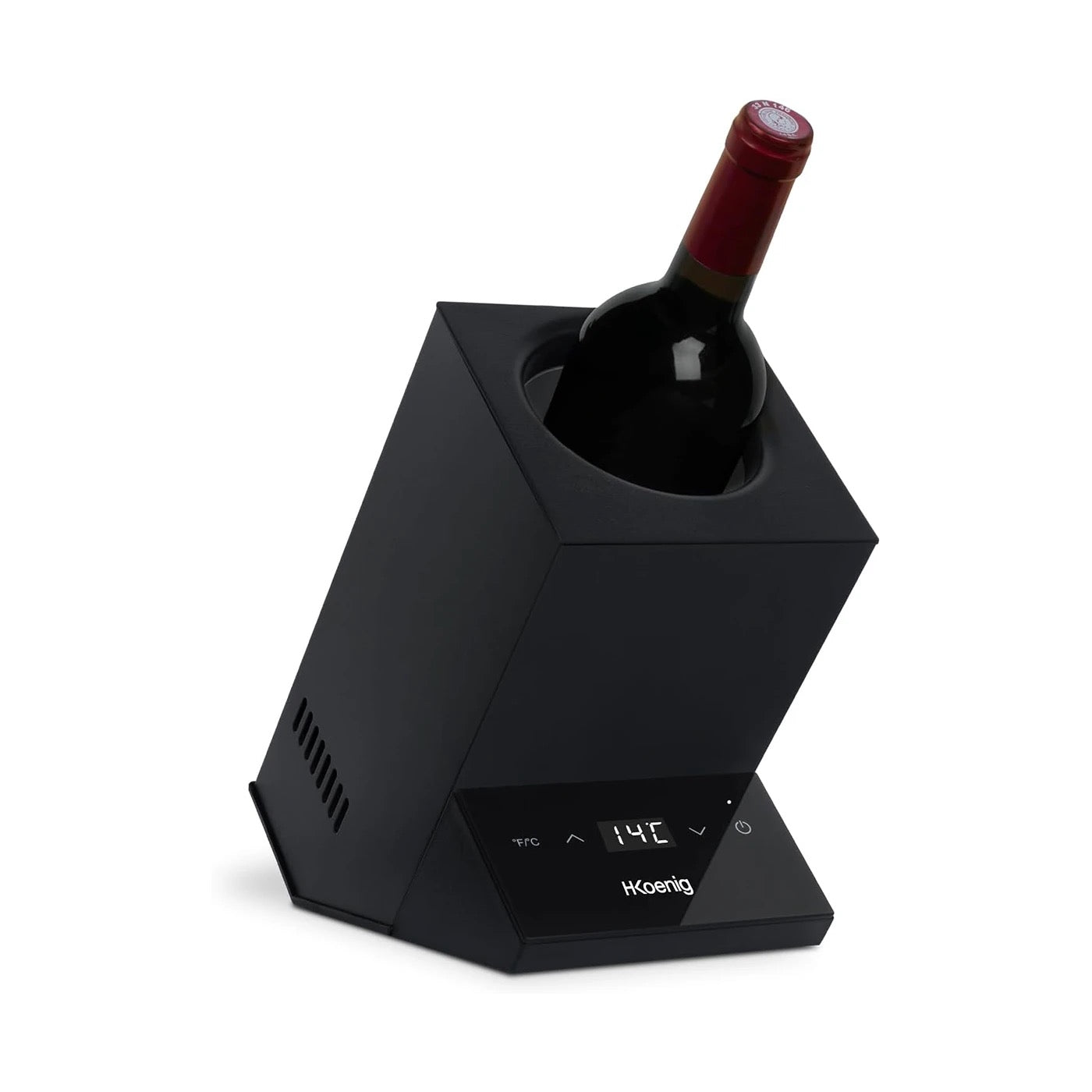
Freestanding wine coolers are designed to be positioned as independent appliances. They can be placed in different areas of a home or business, provided that the ventilation requirements in the manual are observed.
These models often release heat through the rear or sides. They should therefore not be placed inside a closed cabinet or surrounded by panels unless the manufacturer expressly permits this type of installation.
A wine cooler fitting into an opening does not mean that it can be built in. Blocking the airflow around a freestanding model can cause the cooling system to run for longer, increase operating noise or prevent it from reaching the selected temperature correctly.
Built-under wine coolers
Built-under wine coolers are designed to be installed within kitchen cabinetry, usually in an opening beneath the worktop.
They commonly incorporate front ventilation in the lower part of the appliance. This allows air to enter and leave from the front without relying exclusively on free space behind or at the sides.
For a correct installation, check:
- The exact dimensions of the wine cooler.
- The minimum and maximum dimensions of the opening.
- The adjustable height provided by the feet.
- The position of the front ventilation grille.
- The space required to open the door fully.
- Any plinths, handles or adjacent cabinets that could interfere.
The front grille must remain unobstructed. Covering it with a continuous plinth or placing objects in front of it can restrict airflow.
Wine coolers built into a column
Wine coolers designed for column installation are made to be fitted at a specified height within a tall kitchen cabinet.
Correct installation requires both the cabinet opening dimensions and the manufacturer's specified air inlets and outlets to be observed. Depending on the model, air may enter at the bottom, rise behind the cabinetry and leave through an opening at the top.
The cabinet should not be designed using only the external dimensions of the appliance. The installation diagram may specify an airflow channel, a minimum inlet and outlet area or additional depth.
When planning a new kitchen, the safest approach is to select the wine cooler first and provide its installation diagram to the kitchen designer, architect or installer.
Why ventilation is so important
During operation, a wine cooler removes heat from its interior and needs to release it into the surrounding environment. Ventilation carries this heat away and helps the cooling system maintain the selected temperature.
Insufficient ventilation can result in:
- The compressor running for longer.
- More noticeable noise during certain periods.
- Difficulty reaching the selected temperature.
- Higher energy consumption than under the intended conditions.
- Unnecessary wear on components.
This does not mean that installing a wine cooler is complicated. The key is to choose the right installation type and follow the diagram for the specific model.
How much space should be left around a wine cooler?
There is no single clearance that applies to every wine cooler. Some built-in models are designed to fit closely within cabinetry and ventilate from the front, while certain freestanding models require space at the sides, rear or top.
The correct clearances must always be checked in:
- The product page.
- The technical specification.
- The instruction manual.
- The installation diagram.
If this information is unavailable or the proposed location has unusual features, seek advice before ordering the cabinetry or purchasing the wine cooler.
Ambient temperature and climate class
The climate class indicates the ambient temperature range for which the appliance has been designed. It should not be confused with the temperature range that can be selected inside the wine cooler.
For example, the ability to set a particular internal temperature does not mean that the wine cooler can be used in any room or withstand extreme ambient temperatures.
If the room falls outside the permitted range, the wine cooler may struggle to maintain its internal temperature. This is particularly important in spaces without stable temperature control.
Can a wine cooler be installed in a garage or storeroom?
It may be possible, but it depends on the conditions in the space and the climate class of the model. Before installing a wine cooler in a garage or storeroom, check:
- The minimum and maximum temperatures reached throughout the year.
- That there is no excessive humidity or condensation.
- That a suitable electrical supply is available.
- The ventilation available around the appliance.
- That the floor is firm, stable and level.
A garage that becomes very cold in winter or very hot in summer may fall outside the operating conditions of many domestic models.
Can a wine cooler be installed on a terrace?
A domestic wine cooler should not be installed outdoors unless the manufacturer expressly states that the model has been designed for outdoor use.
Direct sunlight, rain, humidity, dust and significant temperature changes can affect its operation and safety. A glazed terrace does not automatically provide suitable conditions, as it can reach very high temperatures.
Can a wine cooler be installed in the kitchen?
Yes. The kitchen is one of the most common locations, particularly for built-under and column-mounted wine coolers.
Whenever possible, avoid positioning the appliance immediately beside strong sources of heat such as:
- Ovens.
- Hobs.
- Radiators.
- Heating ducts.
- Windows exposed to direct sunlight.
If the kitchen layout requires the wine cooler to be placed close to another appliance, follow the manufacturers' instructions on insulation, separation and ventilation, as well as the cabinetry design requirements.
It is also important to ensure that the door can open far enough for the shelves to be removed and bottles to be arranged comfortably.
Can a wine cooler be installed in the living room?
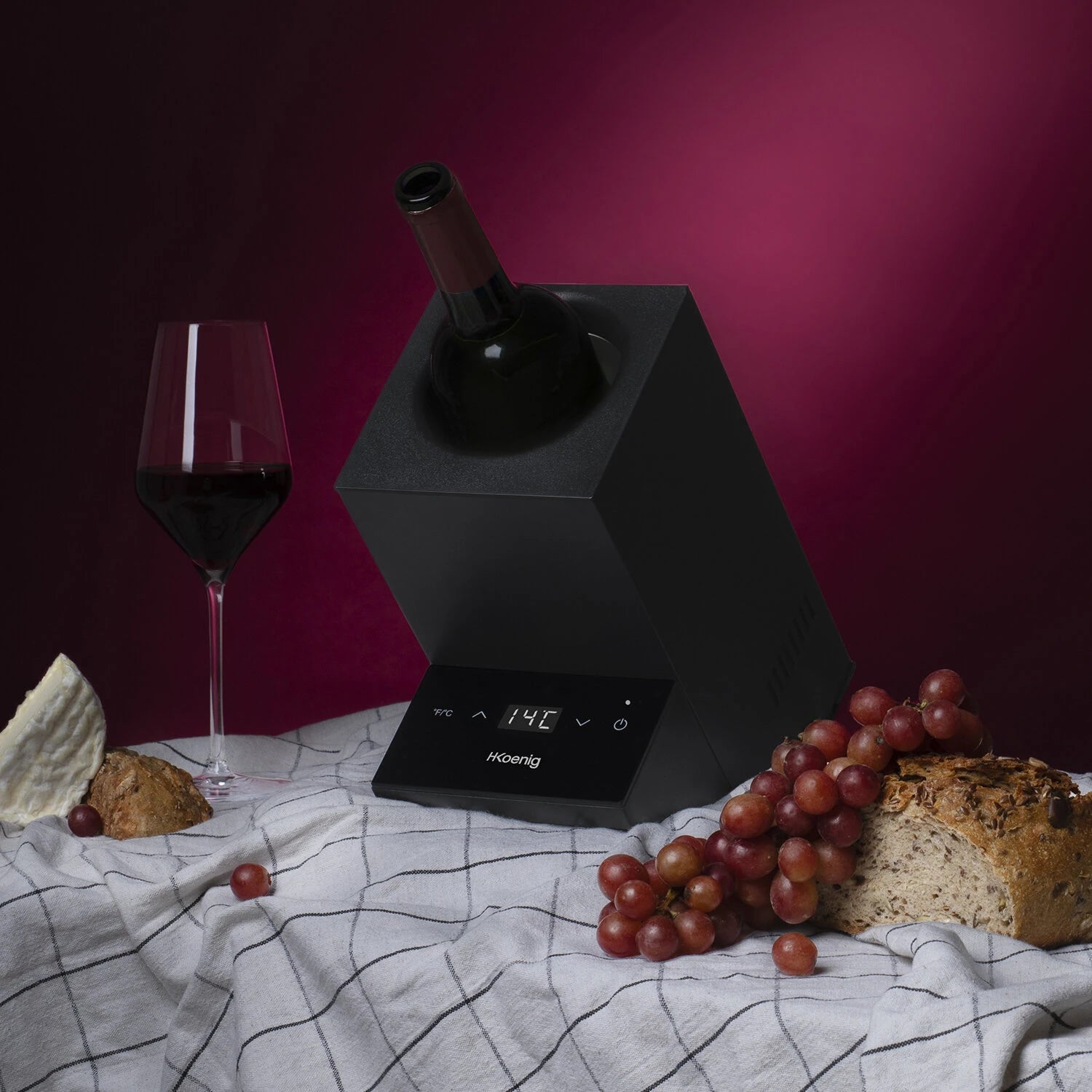
Yes. A freestanding wine cooler can fit naturally into a living or dining room provided that the required ventilation space is available.
In a living area, it is particularly useful to check the noise level stated in decibels. Although the cooling system operates intermittently, choosing a quiet model can improve acoustic comfort.
Avoid direct sunlight and choose a stable surface. The wine cooler should be level so that the door closes correctly and the bottles rest securely.
Common wine cooler installation mistakes
Building in a freestanding model
This is one of the most common mistakes. Placing an independent wine cooler inside an enclosed opening can block heat dissipation. A model must be expressly designed for built-in installation before it is fitted within cabinetry.
Measuring only the width of the opening
The height, depth, door opening, socket position, ventilation and the possible presence of skirting boards or plinths must also be checked.
Covering the front grille
On built-under models, the lower grille forms part of the ventilation system. It must not be concealed behind a closed plinth or blocked by objects.
Not consulting the installation diagram
Two wine coolers with similar external dimensions may require different openings or airflow routes. The manual for the specific model is the definitive reference.
Choosing a room with extreme temperatures
A space that becomes too cold or too hot may fall outside the permitted climate class even if its dimensions are suitable.
Failing to allow for the door opening
A wall, column, nearby handle or surrounding cabinetry can limit the door opening. Check the door direction and the space required to use the shelves before installation.
Frequently asked questions about wine cooler installation
Can I place a freestanding wine cooler beneath a worktop?
Only if the manufacturer expressly confirms that the model is suitable for that position and its ventilation requirements are met. Fitting beneath the worktop does not automatically mean that a wine cooler can be built in.
Do all built-in wine coolers have front ventilation?
This should not be assumed. Front ventilation is common among built-under models, but the precise system must be checked in the technical specification and manual of each wine cooler.
Will I need building work to install a wine cooler?
A freestanding wine cooler normally requires only a suitable location and a compatible electrical socket. Built-in models need an opening prepared according to the installation diagram and may require alterations to the cabinetry.
Can I place it next to the refrigerator?
It may be possible if both appliances have the ventilation they require and the installation complies with their manufacturers' instructions. Check that both doors can also open without interference.
Does the electrical socket need to remain accessible?
The electrical connection must comply with the manual and applicable regulations. It is advisable for the appliance to be safely disconnected without permanently dismantling the cabinetry.
Can poor ventilation increase energy consumption?
Yes. If heat cannot be released correctly, the cooling system may need to operate for longer. Choosing the correct model and following its installation instructions helps maintain the intended performance.
Does delivery include installation?
Delivery of the wine cooler does not necessarily include installation or preparation of the cabinetry. The service conditions should be checked on the product page and during the purchasing process.
The right wine cooler for every space
Choosing where to install a wine cooler is straightforward when you start with the right model. A freestanding wine cooler provides flexibility, a built-under model integrates neatly into the kitchen, and a column model can create an elegant architectural composition.
At Vinoteca.es, we provide the installation type and dimensions of each model to help you find an option that suits your space. If you have questions about a particular opening, you can request specialist advice before purchasing.
Because every wine collection deserves its own place, and correct installation is the first step towards preserving it in stable conditions and enjoying it at its best.