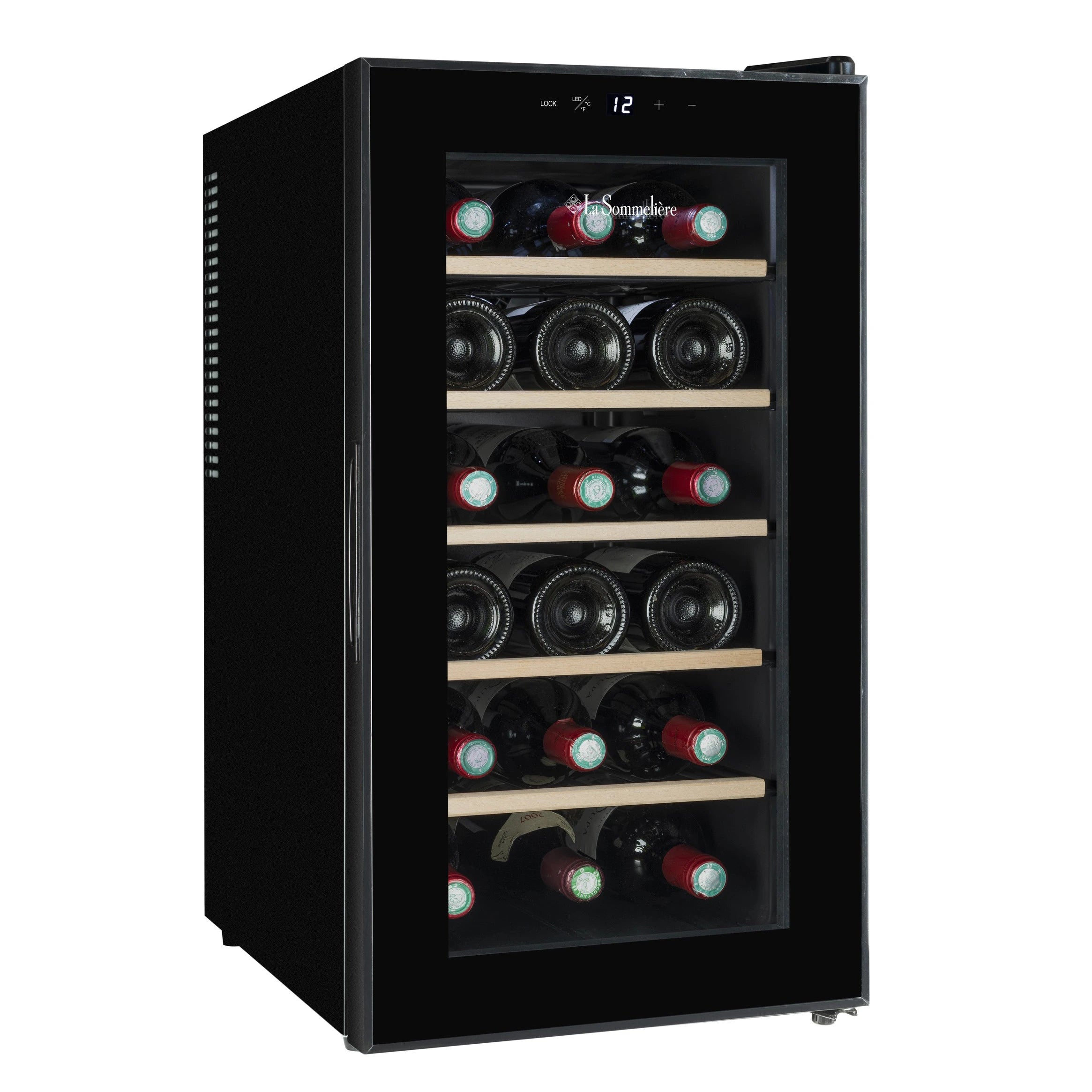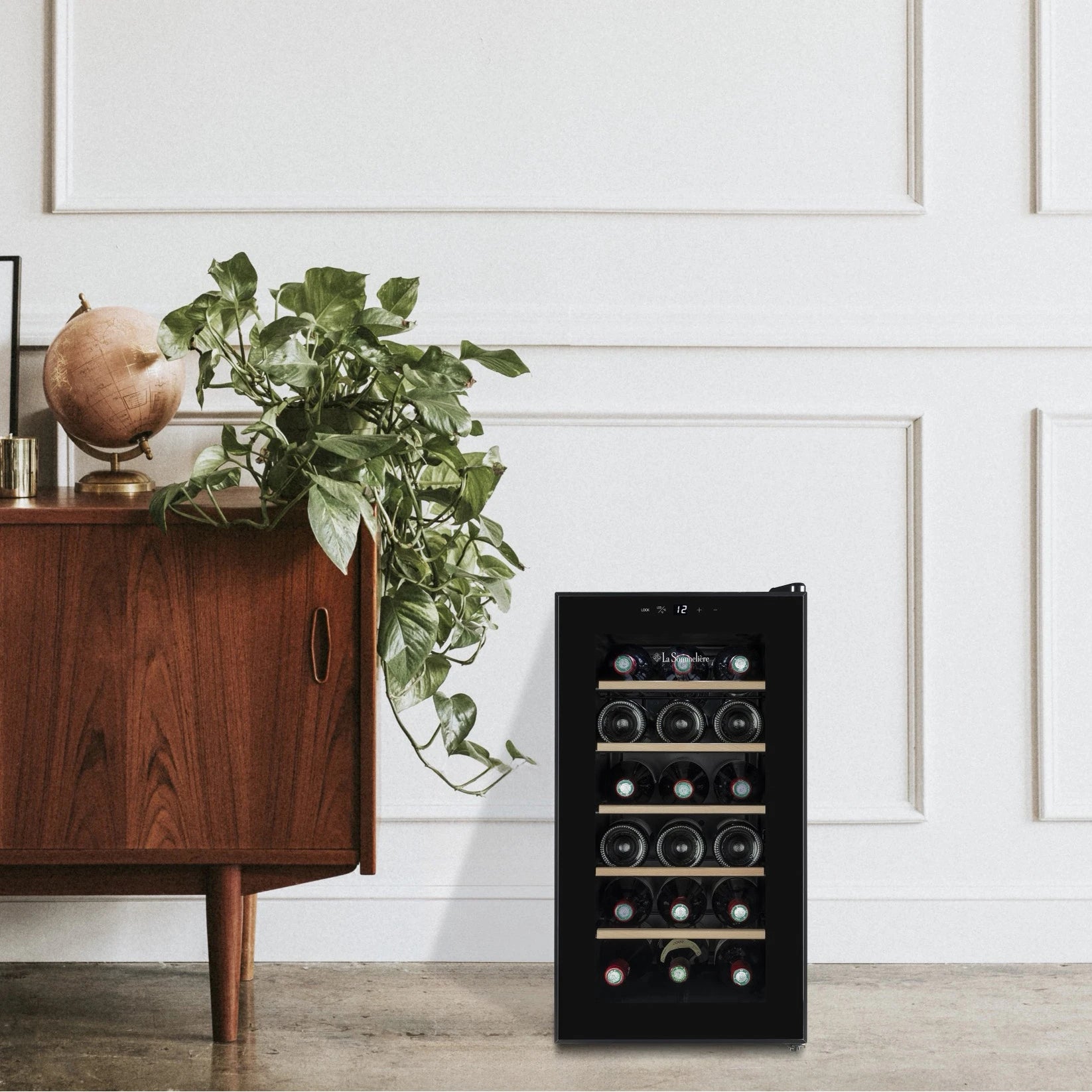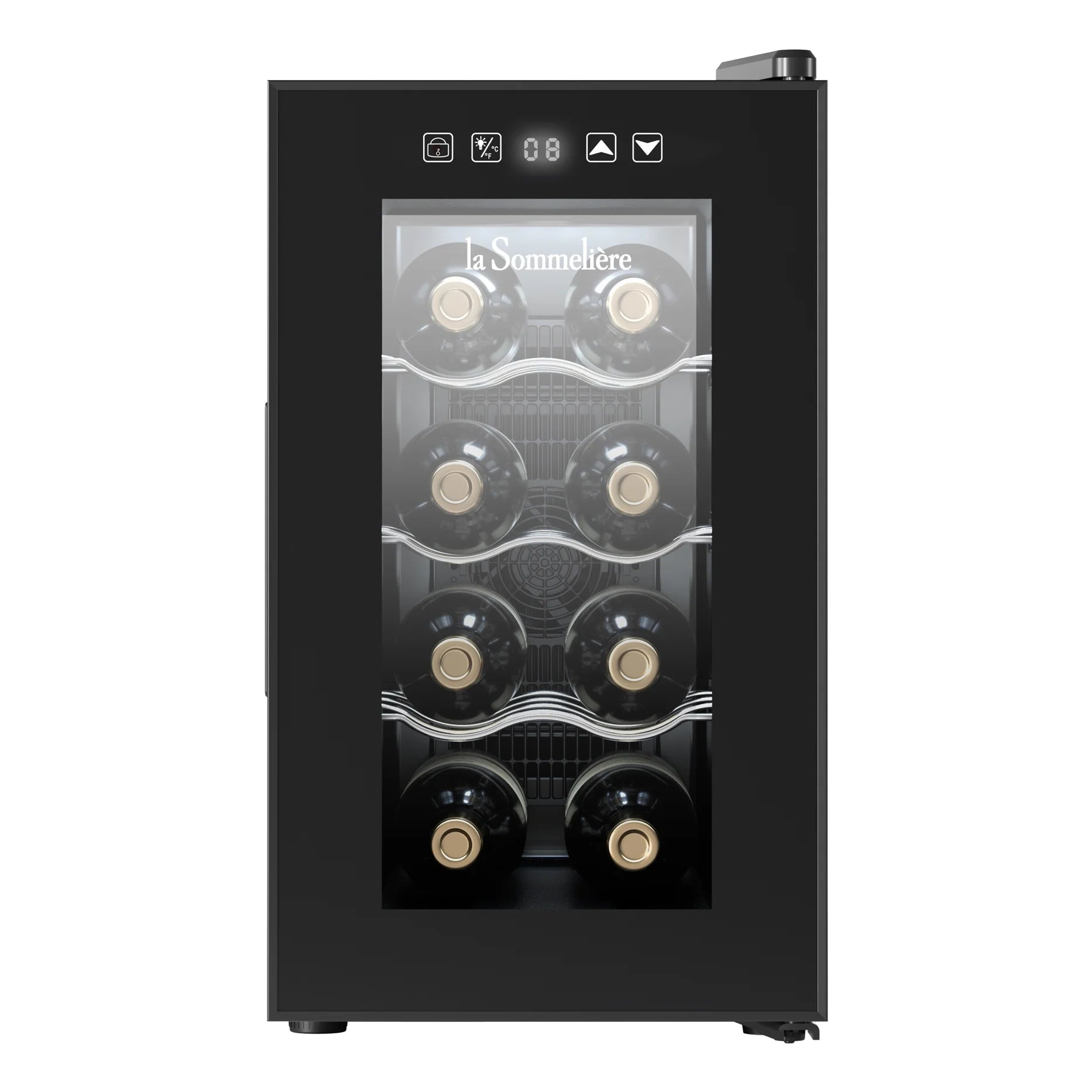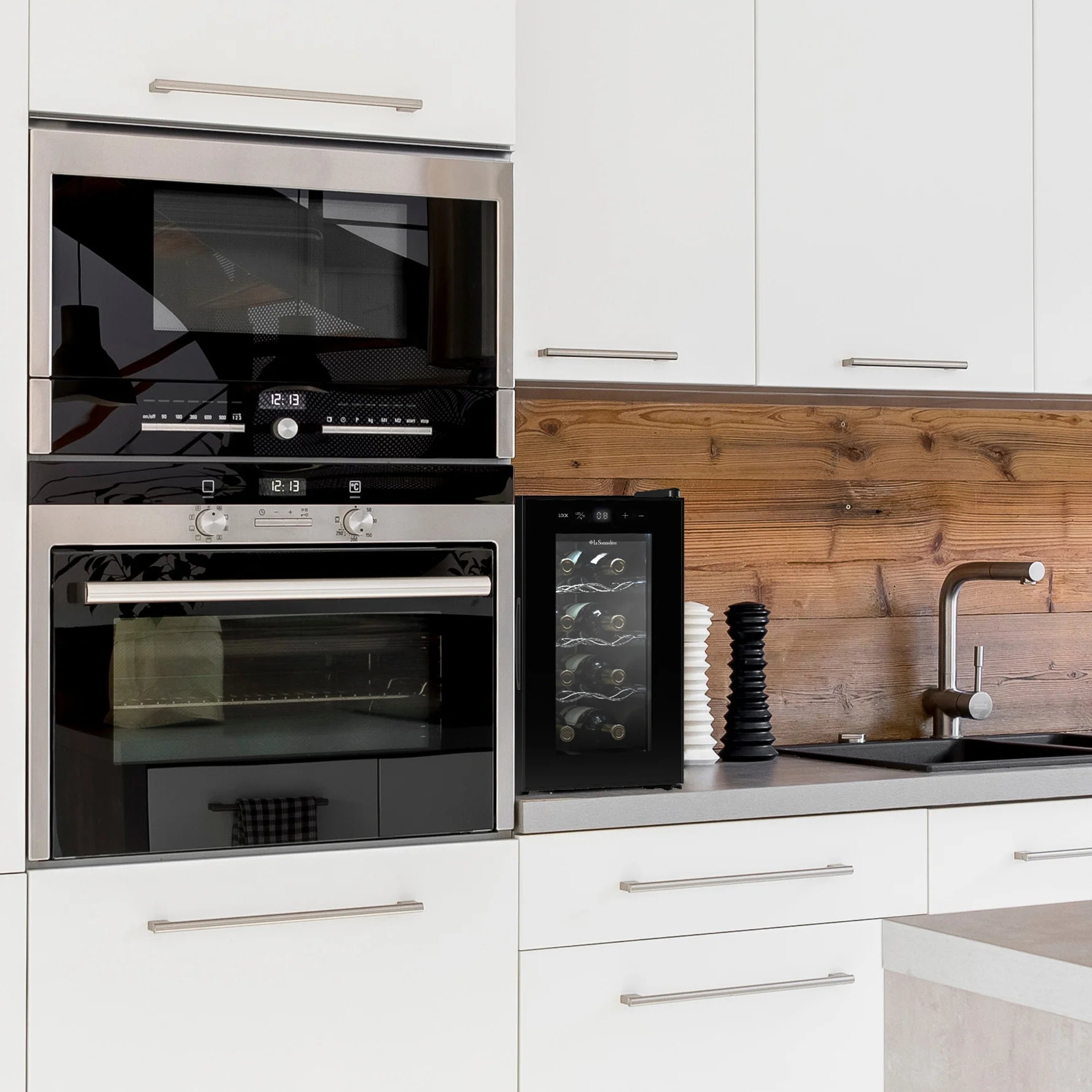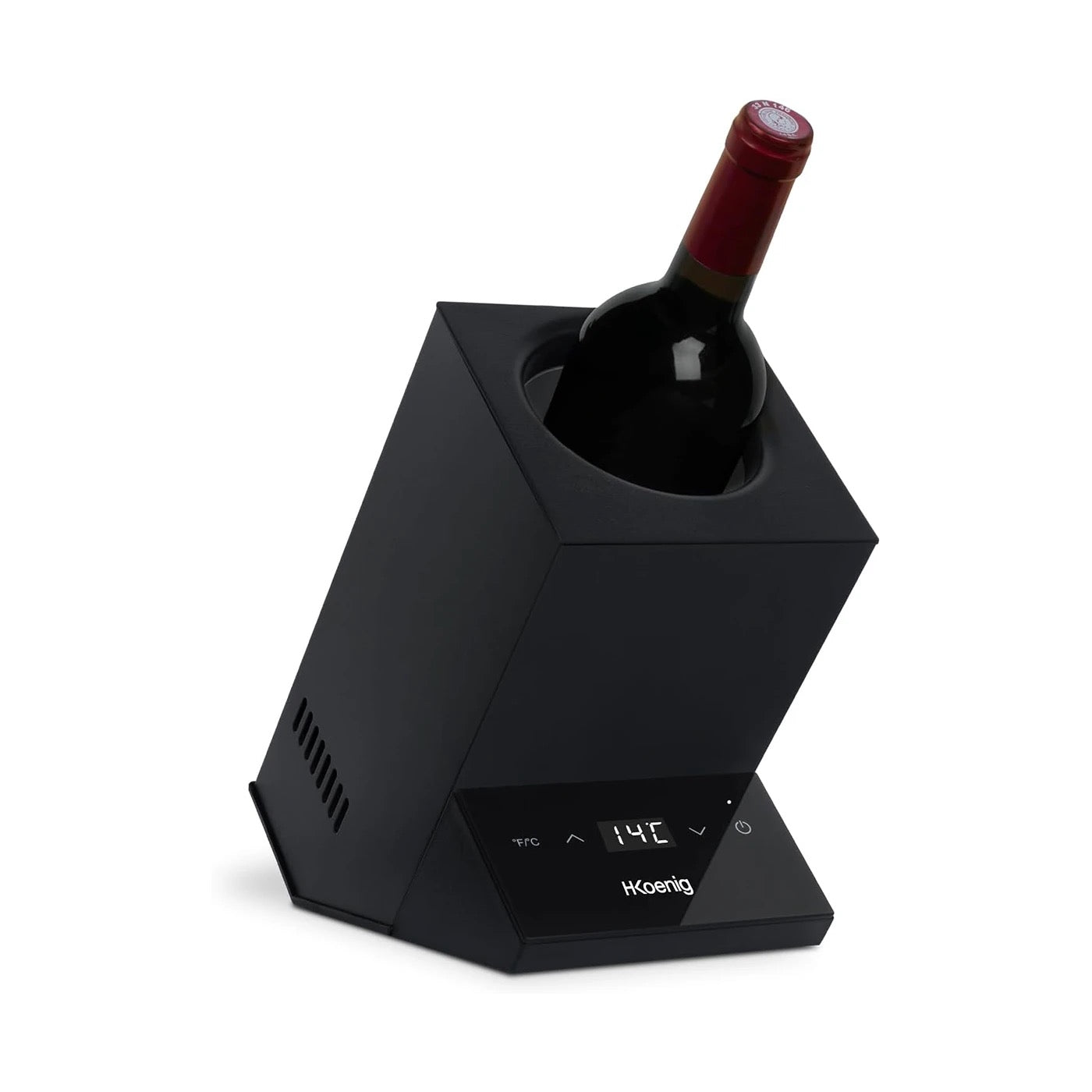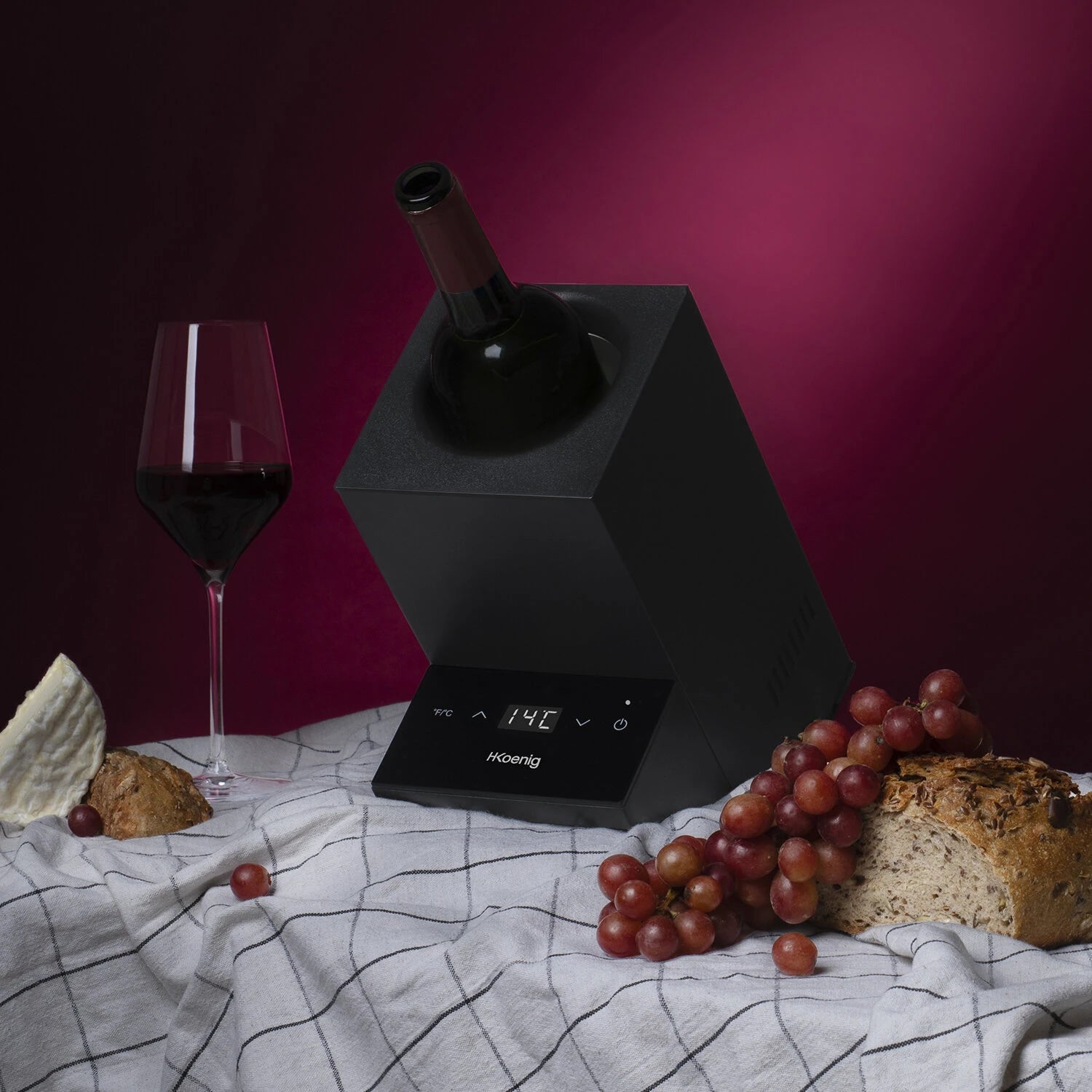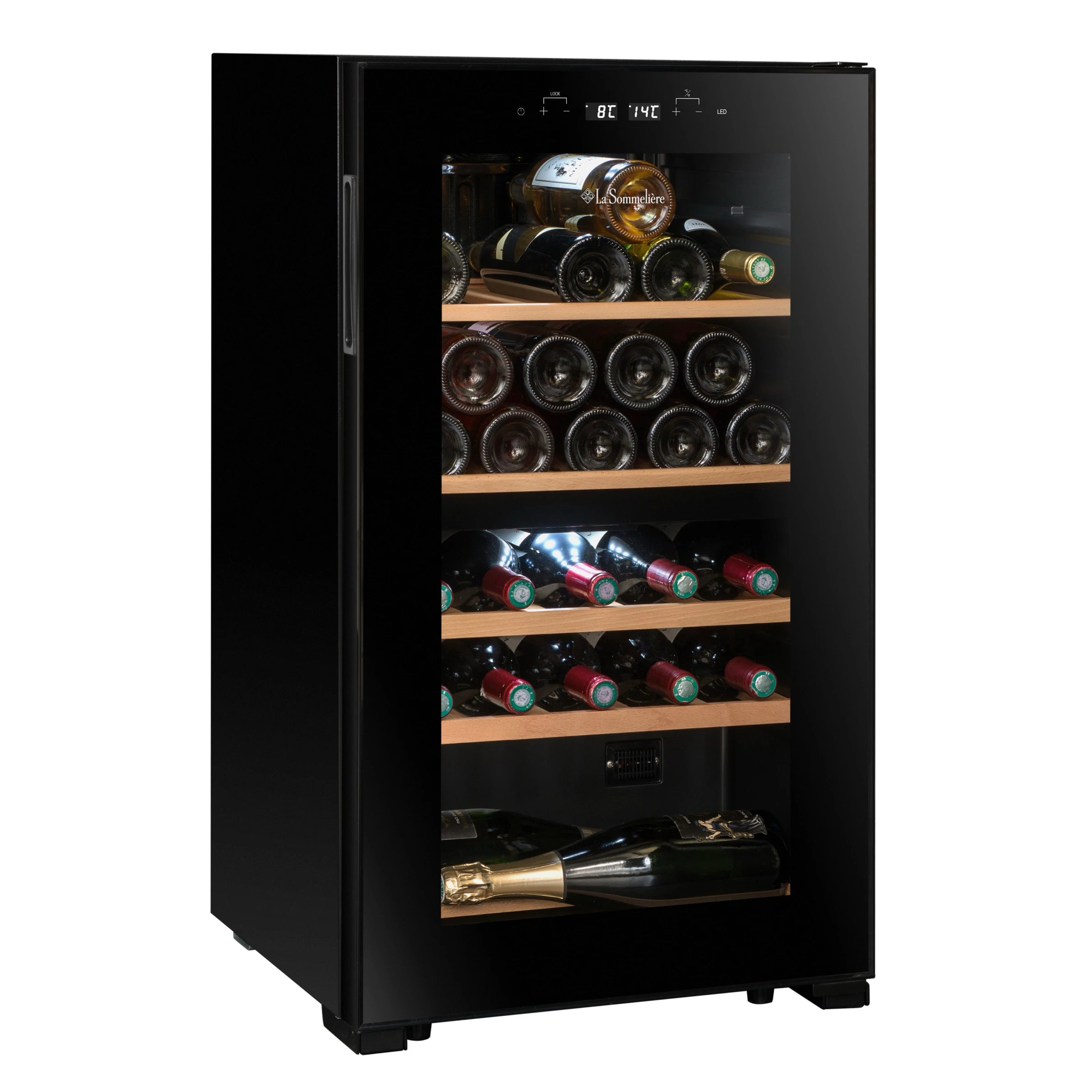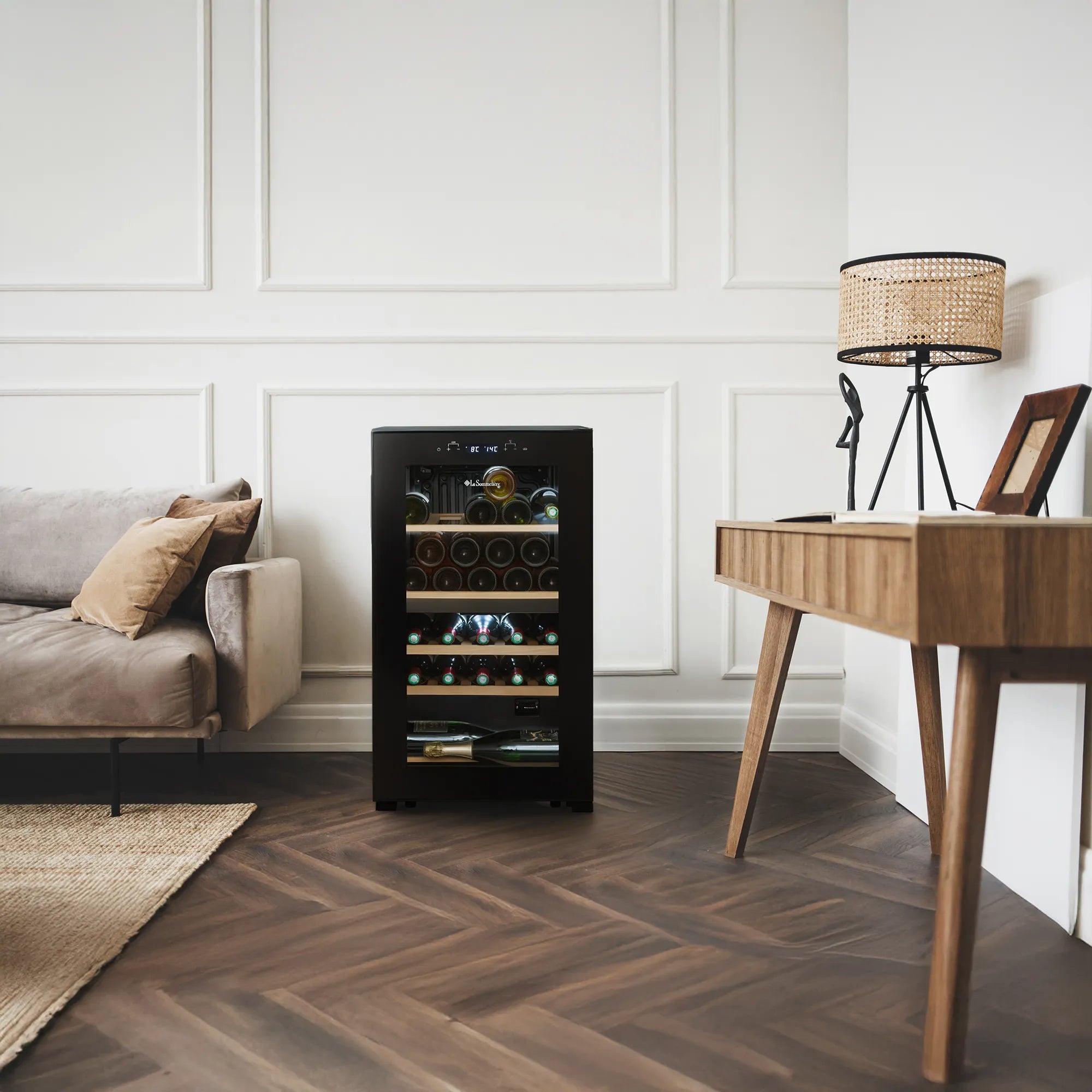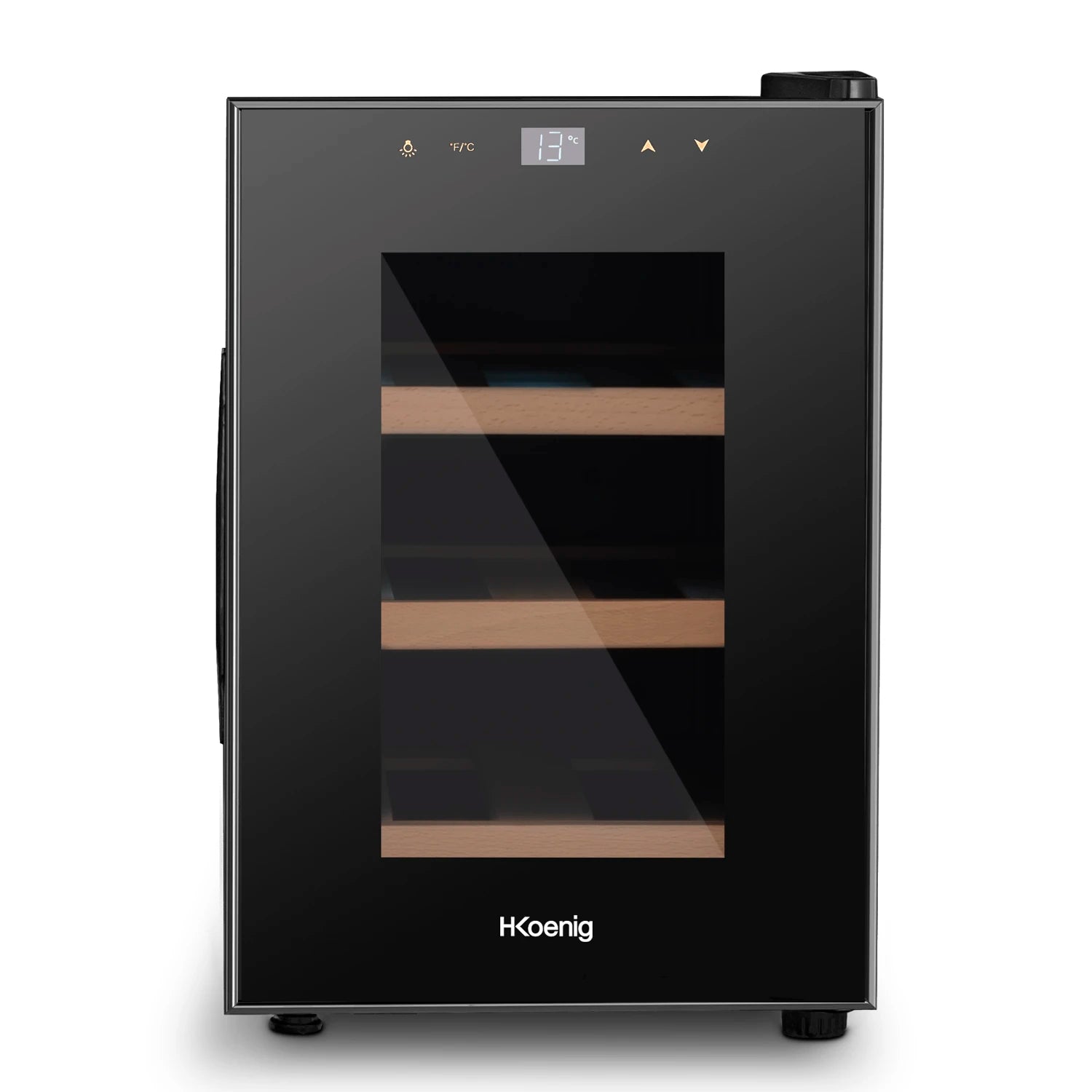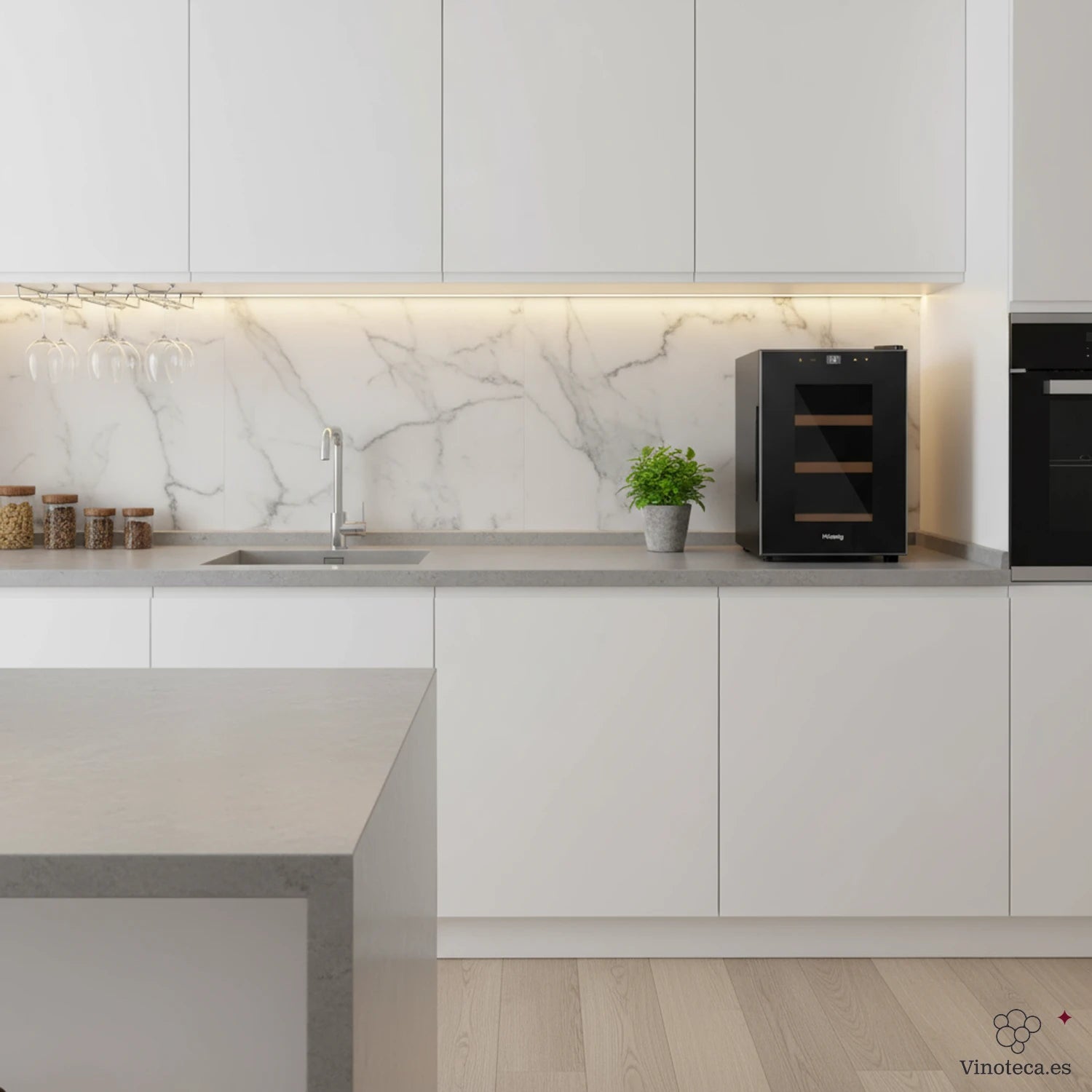
A wine cooler is designed to maintain wine at a stable temperature efficiently. Its energy consumption can be checked before purchase and, with the right choice and correct installation, you can enjoy precise wine storage without unexpected electricity costs.
How much electricity does a wine cooler actually use?
The energy consumption of a wine cooler depends on the model, its capacity, the technology it uses and the conditions in the room where it is installed. There is therefore no single figure that applies to every appliance.
The best reference for checking the energy use of a specific model is its energy label. This shows its estimated annual electricity consumption in kilowatt-hours, expressed as kWh per year.
This information lets you compare different wine coolers before making a choice. The figure represents a full year of operation under standardised test conditions. It does not mean that the appliance uses the same amount of electricity every day or operates continuously at maximum power.
A stable temperature supports efficient operation
Once the selected temperature has been reached, the cooling system switches on only when necessary to maintain it. The wine cooler alternates between operating and resting periods, just like other refrigeration appliances.
For this reason, a suitable location and a stable internal temperature help the appliance work efficiently. It does not need to cool the entire cabinet from the beginning every time it starts; it simply compensates for the small temperature variations that occur during everyday use.
How to read a wine cooler energy label
The European energy label helps you understand and compare the main operating data for each model. A domestic wine cooler label will normally show:
- Energy efficiency class: shown on a scale from A to G.
- Annual energy consumption: expressed in kWh per year.
- Capacity: the approximate number of standard 0.75-litre Bordeaux bottles it can hold.
- Noise level: expressed in decibels together with its acoustic noise class.
- QR code: provides access to the official product information registered in the European EPREL database.

The most useful figure for estimating electricity costs is annual consumption in kWh. For a simple approximation, multiply it by the price per kWh in your electricity tariff.
For example, if a wine cooler indicates a consumption of 120 kWh per year and a hypothetical electricity price of €0.20 per kWh is used, the estimated cost would be €24 per year. This is only a mathematical example: the actual amount will depend on the model, your electricity tariff and the conditions of use.
Do not assess the energy rating letter on its own
The current energy rating scale is more demanding than the one used in the past. A wine cooler in one of the middle classes does not therefore necessarily have excessive energy consumption.
To compare two models properly, consider all of the following:
- Annual energy consumption in kWh.
- Available bottle capacity.
- Number of temperature zones.
- Installation type.
- Storage and control features.
A high-capacity or dual-zone wine cooler may use more electricity than a compact model, but it can also store many more bottles or fulfil a different purpose. The best choice is not always the appliance with the lowest figure, but the one offering the right balance of capacity, features and efficiency.
What affects the energy consumption of a wine cooler?
Capacity and dimensions
As a general rule, a larger wine cooler needs to control the temperature of a greater internal volume. However, this does not mean that its electricity consumption rises in direct proportion to the number of bottles.
If you need to store a growing collection, choosing a wine cooler with sufficient capacity from the outset will usually make more sense than operating several small appliances or replacing one with a larger model shortly afterwards.
One or more temperature zones
Dual- and triple-zone wine coolers allow different types of wine to be kept at different temperatures. This flexibility can require more complex temperature management, although actual consumption depends on the design and efficiency of each model.
If your entire collection is stored at a similar temperature, a single zone may be enough. If you want to separate red, white and sparkling wines, independent zones offer additional convenience that may justify the difference.
Room temperature
A wine cooler installed in a very warm room, exposed to direct sunlight or placed close to an oven will need to work harder to maintain its internal temperature.
It is also important to observe the climate class specified by the manufacturer. This indicates the range of ambient temperatures for which the wine cooler has been designed.
Installation type and ventilation
Every wine cooler must be installed according to its design:
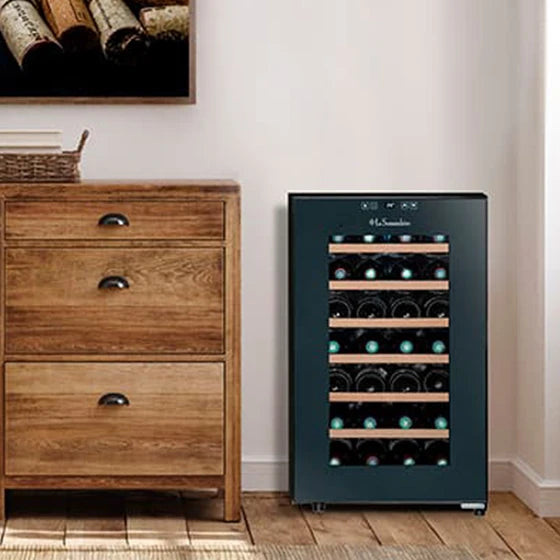
- Freestanding wine coolers require ventilation space around the appliance in accordance with the manufacturer's instructions.
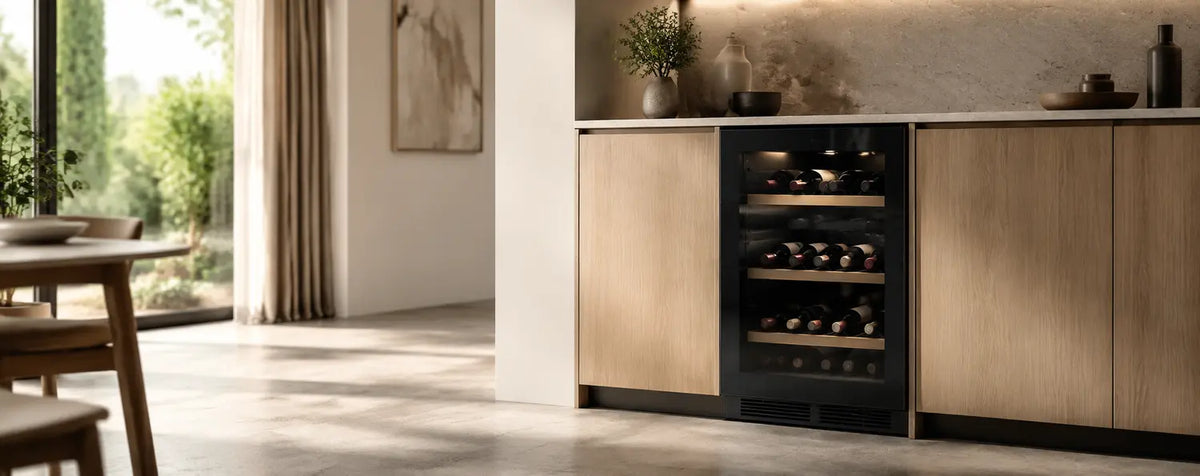
- Built-under wine coolers normally have front ventilation so they can be installed correctly beneath a worktop.
- Built-in column wine coolers require a cabinet aperture and ventilation openings that comply with the measurements in the installation manual.
Insufficient ventilation can make the cooling system run for longer and may affect both electricity consumption and the service life of the appliance.
Opening the door
Opening the door occasionally is part of normal use and should not be a concern. Leaving it open for a long time, however, allows warm air to enter and means that the appliance must then restore the selected temperature.
How to reduce consumption without compromising your wine
Correct use helps keep energy consumption within the expected range while supporting the proper storage of your collection.
- Choose the right capacity: consider both the bottles you own now and the possible growth of your collection.
- Install it in a suitable location: avoid direct sunlight and strong heat sources.
- Respect the ventilation requirements: always follow the clearances and dimensions specified by the manufacturer.
- Select a sensible temperature: wine does not need to be kept excessively cold for storage.
- Avoid leaving the door open: organise your bottles so that you can find them easily.
- Keep ventilation areas clean: accumulated dust can make heat dissipation more difficult.
- Check that the door closes correctly: make sure no bottle prevents it from sealing properly.
Should a wine cooler remain switched on all year?
Yes. A wine cooler is designed for continuous operation and to provide wine with a stable environment. This stability is one of its main advantages over keeping bottles in a kitchen, storeroom or cabinet exposed to temperature changes.
Switching it off and on frequently can cause temperature fluctuations and forces the appliance to restore the full storage temperature. If it contains wine that you want to preserve, it is advisable to leave it switched on and correctly configured.
A wine cooler does more than chill bottles. It helps protect them from temperature changes, light and, depending on the model, vibrations or changes in humidity. Its purpose is to create a more stable home for every wine until the moment it is enjoyed.
Frequently asked questions about wine cooler energy consumption
Does a wine cooler use a lot of electricity?
A wine cooler's energy consumption is generally moderate and is shown on its energy label in kWh per year. The exact figure depends on capacity, the number of zones, its technology and the installation conditions.
Does a dual-zone wine cooler use more electricity?
Not necessarily in every case, although maintaining two compartments at different temperatures can require more complex temperature management. Compare the stated annual kWh figures of the specific models.
Does a built-in wine cooler use more than a freestanding model?
The installation type alone does not determine energy consumption. Compare the energy label of each model and ensure that the appliance is installed with the required ventilation.
Should I switch it off when only a few bottles remain?
If it still contains wine that you want to store, it is preferable to leave it running. Temperature stability is more important than filling the cabinet completely.
Does filling a wine cooler increase its energy consumption?
Bottles that have already reached the selected temperature help maintain thermal stability inside the cabinet. Adding many bottles at room temperature can temporarily increase the work of the cooling system, but the temperature will then stabilise again.
Where can I check the exact energy consumption?
You will find the annual consumption on the energy label and in the product information sheet. The QR code on the label also provides access to the official information registered in EPREL.
Choosing the right efficient wine cooler
Energy consumption is an important consideration, but it should be assessed alongside bottle capacity, noise, installation type and the storage conditions required by your collection.
At Vinoteca.es, you will find detailed information for each model and specialist advice to help you choose a wine cooler suited to your space, your wines and your lifestyle.
Because storing wine properly is not simply about cooling it: it is about providing the stability it needs to reach every special occasion in the best possible condition.