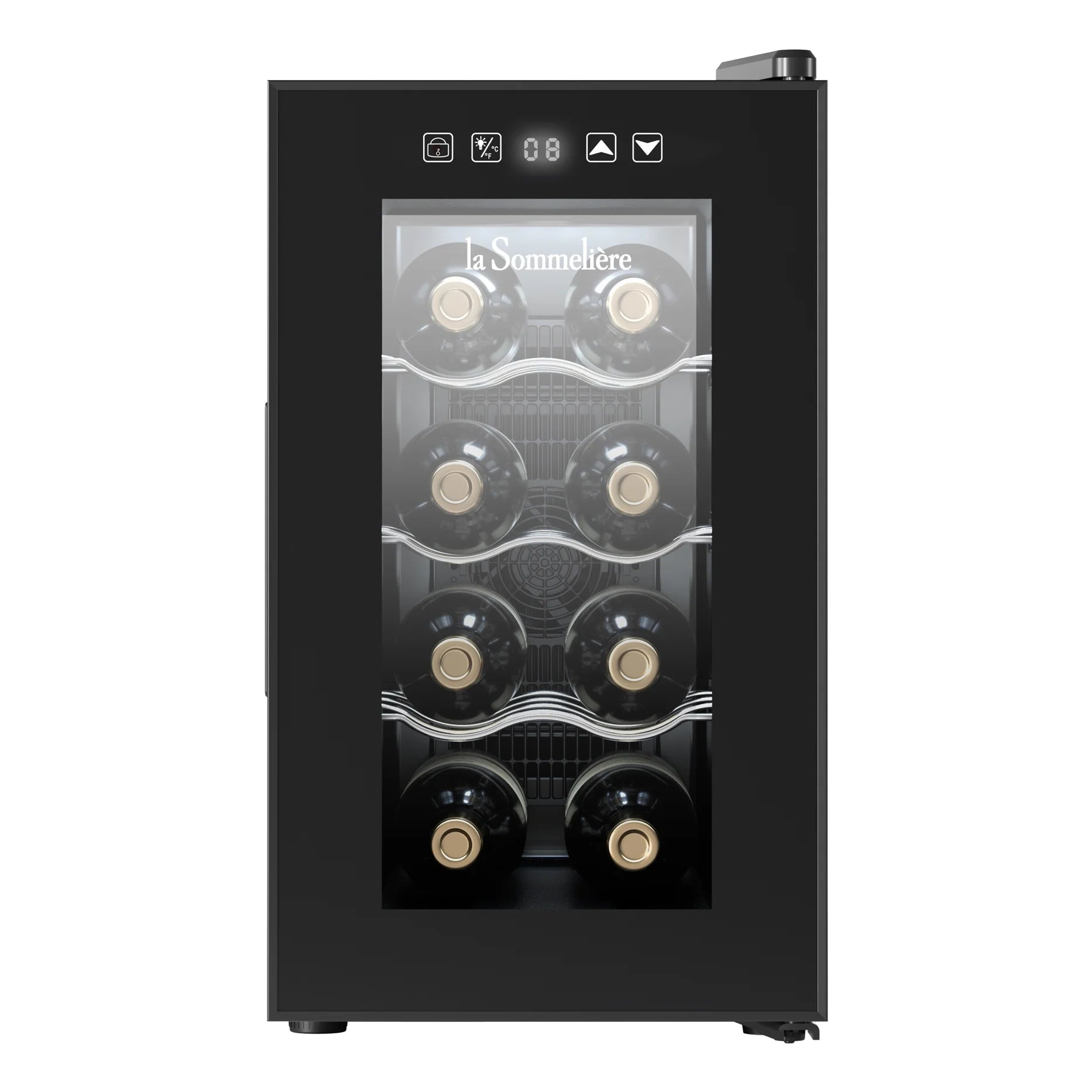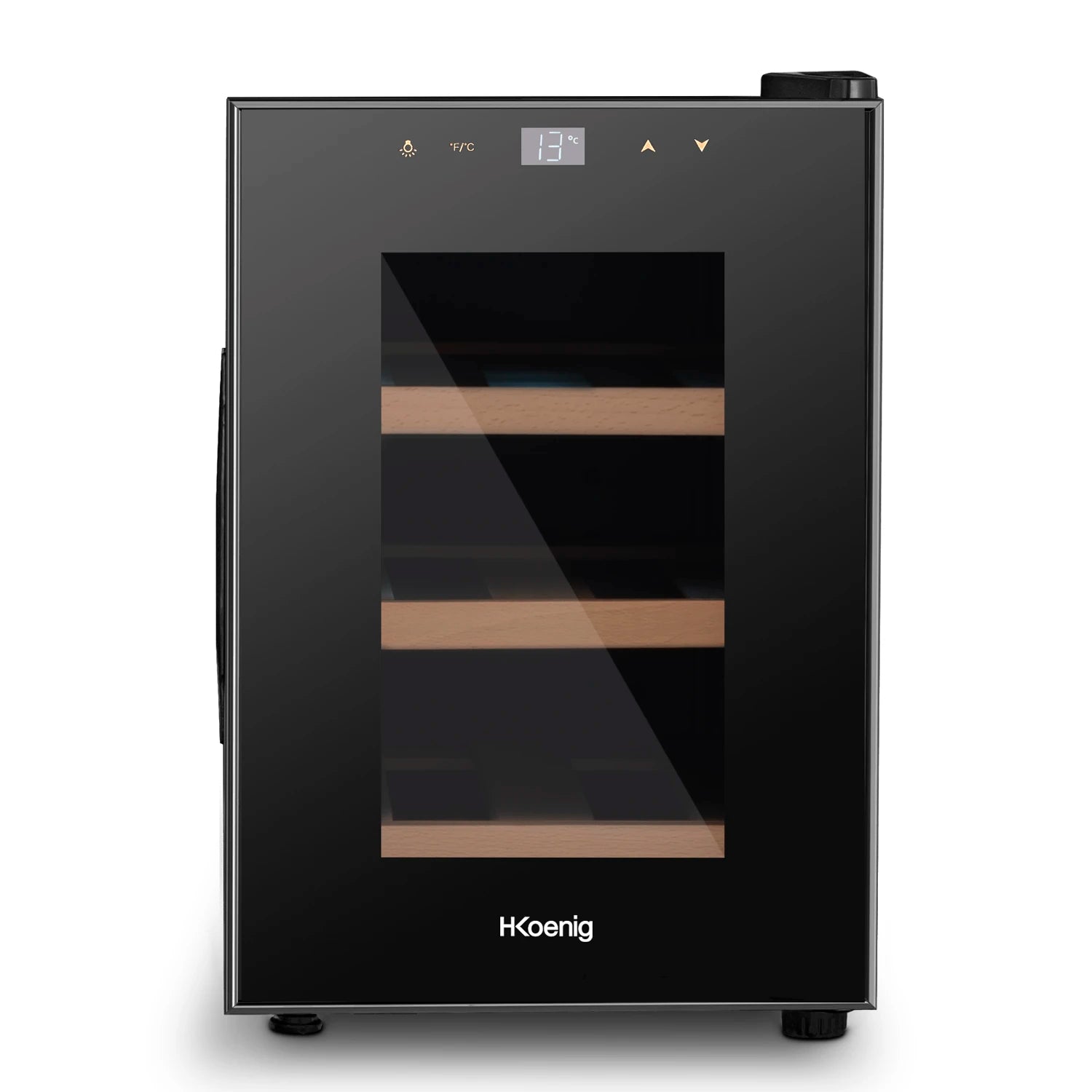

Imagine opening the door of your new wine cooler and seeing your favorite bottles lined up, each in its perfect place. To make that possible, manufacturers speak a common language: the " 0.75-liter Bordeaux bottle ." But what does this standard really mean, and why is it so important when choosing your wine cooler at Vinoteca.es? Let's discover the story and the emotional reason behind that magical 0.75L figure, and how it influences the way you store and enjoy your wine at home. ❤️🍷
Why is the 0.75 L Bordeaux bottle used as the standard?
The 0.75-liter wine bottle , also called a Bordeaux bottle because of its origin in Bordeaux, has become the universal unit of measurement for wine. This is no coincidence: since 1970, there has even been an international agreement establishing it as the standard commercial size. This standardization facilitates the global wine trade and gives us all a common reference point. In Europe, it's the law: the European Union defines the standard Bordeaux bottle as 0.75 L , and wine cooler capacities are usually based on this measurement. In other words, when you see "Capacity: 28 bottles (0.75 L Bordeaux type)" specified for a model on Vinoteca.es, you know exactly what it means.
Why 0.75 L and not another size? There are several colorful theories about the origin of this measurement. Some say that 0.75 L was approximately the amount of air an old glassmaker could blow at once while making a bottle (human lung capacity!). Others say it was equivalent to the ideal portion of wine to accompany a moderate family dinner. It's also said that 0.75 L fit well with old English units, as it was close to 1/5 of a gallon – a useful measure for large British wine merchants. Legend aside, the fact is that over time this bottle became the most common worldwide . Using it as a standard has many advantages: it allows us to easily compare the capacity of different wine cellars and ensures that wineries, distributors, and customers speak the same "language" when referring to how many bottles fit. Furthermore, standardizing the size avoids confusion – just as with other standards in our lives, from electrical outlets to tire sizes.
Ultimately, the 0.75L Bordeaux bottle is the universal benchmark for wine lovers. Its international use gives us the peace of mind that an "18-bottle wine cellar" will have a consistent meaning regardless of the brand or country. And it has emotional significance too: a 0.75L bottle is usually equivalent to about five glasses of wine, just enough to share a special moment with a partner or friends. How could we not adopt it as our measure of wine-related happiness? 🥂

Standard bottle dimensions (Bordeaux) and wine cellar design
The 0.75 L Bordeaux bottle not only standardizes the amount of wine, but also has typical physical dimensions that have influenced the design of home wine cellars. A Bordeaux bottle is typically around 27–30 cm tall and about 7.5 cm in diameter. These proportions (tall, cylindrical body with pronounced shoulders) allow the bottles to be stored horizontally, keeping the cork moist, while also optimizing space: they are slender enough to fit several in a row on a shelf.
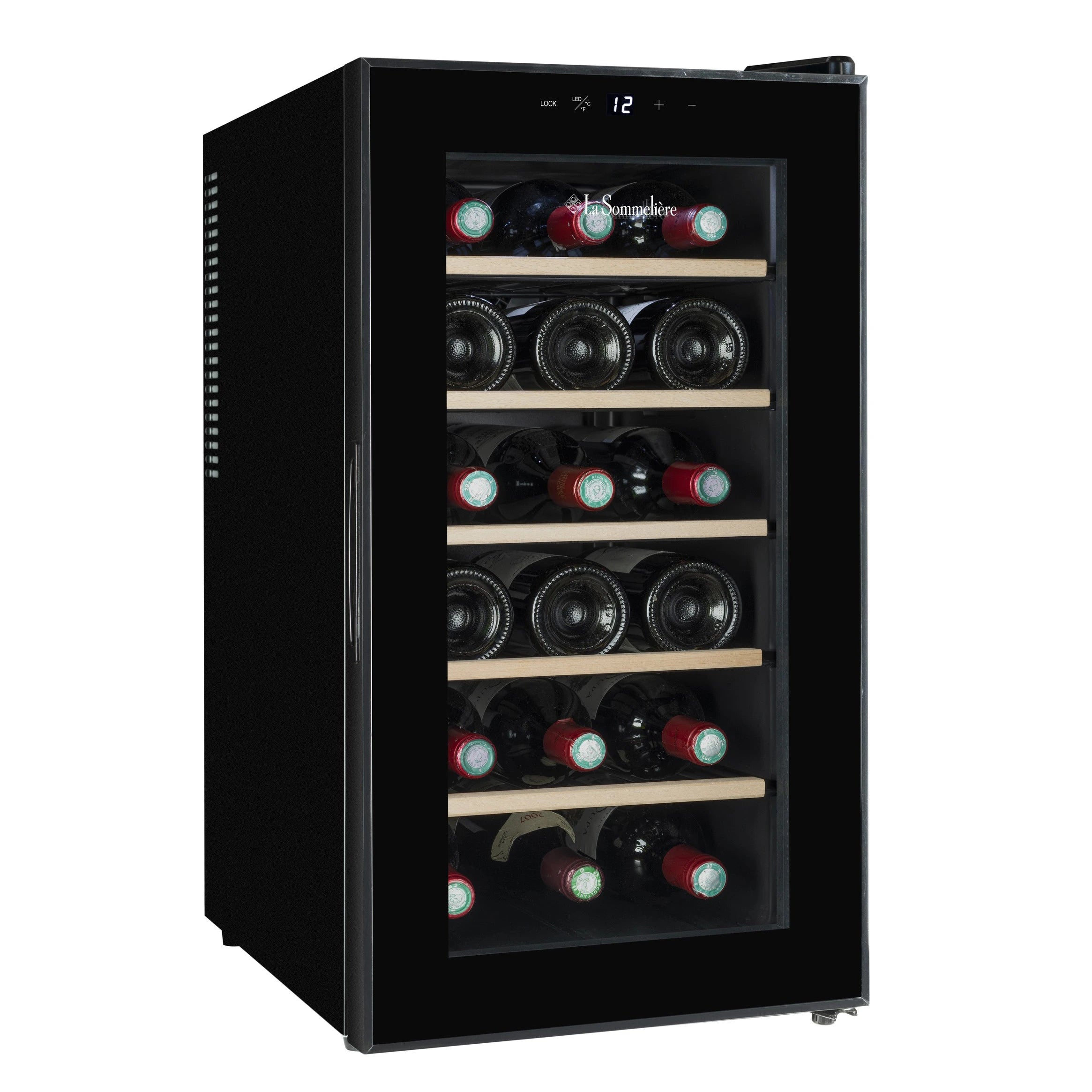
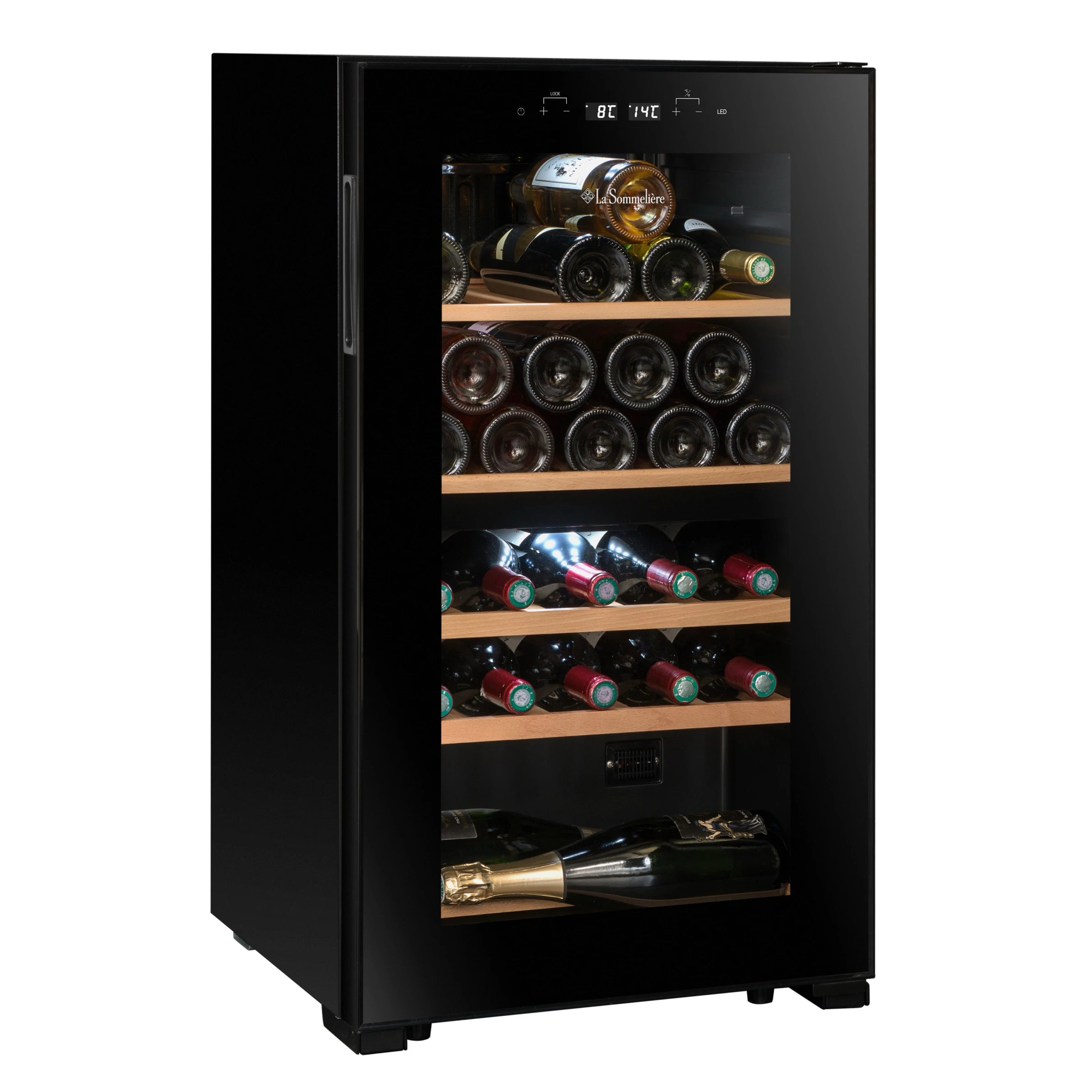
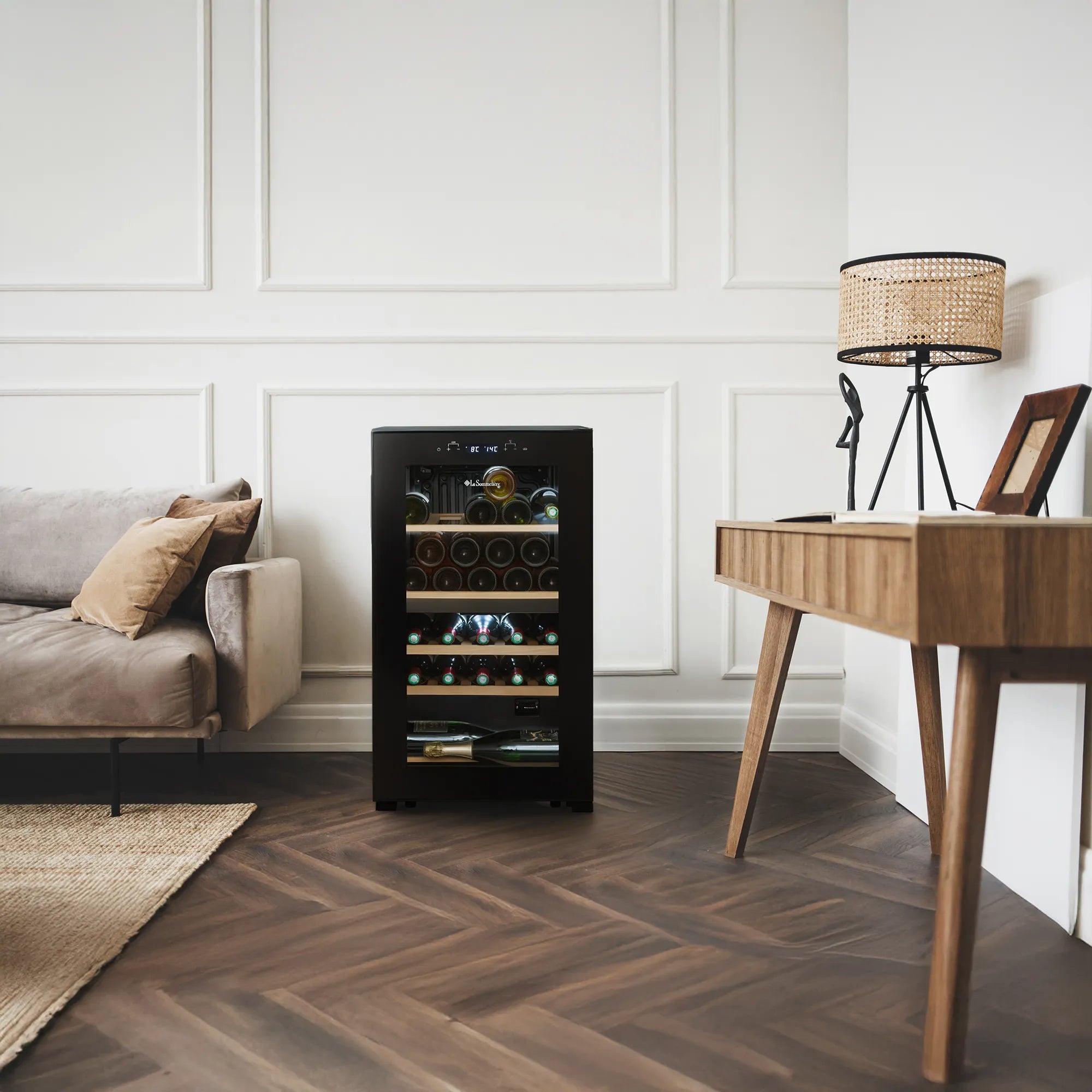
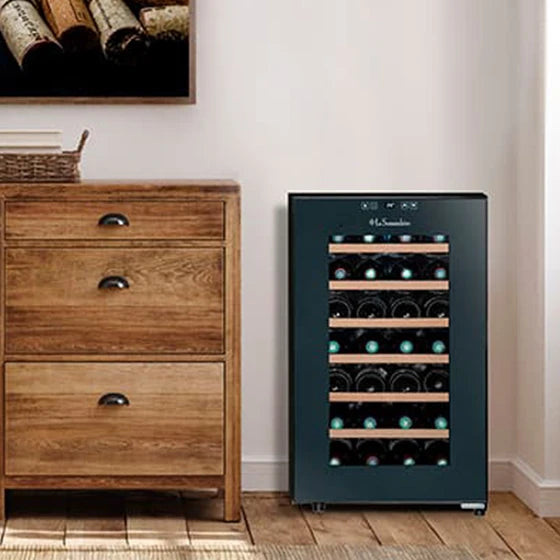
Wine cooler manufacturers take advantage of this uniformity. The shelves and compartments of a typical wine cooler are designed to accommodate bottles approximately 7.5 cm wide, like perfectly fitting puzzle pieces. The result: when we're told a wine cooler holds X bottles, that number assumes they're all standard Bordeaux-sized. If we only use that type of bottle, we can trust the manufacturer's figure for how many will fit comfortably. For example, a compact 28-bottle wine cooler will have shelves sized to hold approximately 28 0.75 L bottles without issue.
Wine coolers are designed with the Bordeaux bottle's dimensions in mind . The internal height between shelves is usually around 30 cm or slightly less, enough for a standard bottle to fit horizontally without touching the one above. The depth of the wine cooler also typically exceeds 30 cm so that bottles of approximately 29 cm don't protrude and the door closes properly. The width of each shelf usually allows for several bottles to be placed in a row (in many models, 5 to 8 bottles per shelf, depending on the unit's width). Thanks to the Bordeaux bottle's straight sides and pronounced shoulders, it can be stacked efficiently , making excellent use of available space. It's as if wine coolers were tailor-made for this type of bottle: everything fits perfectly.
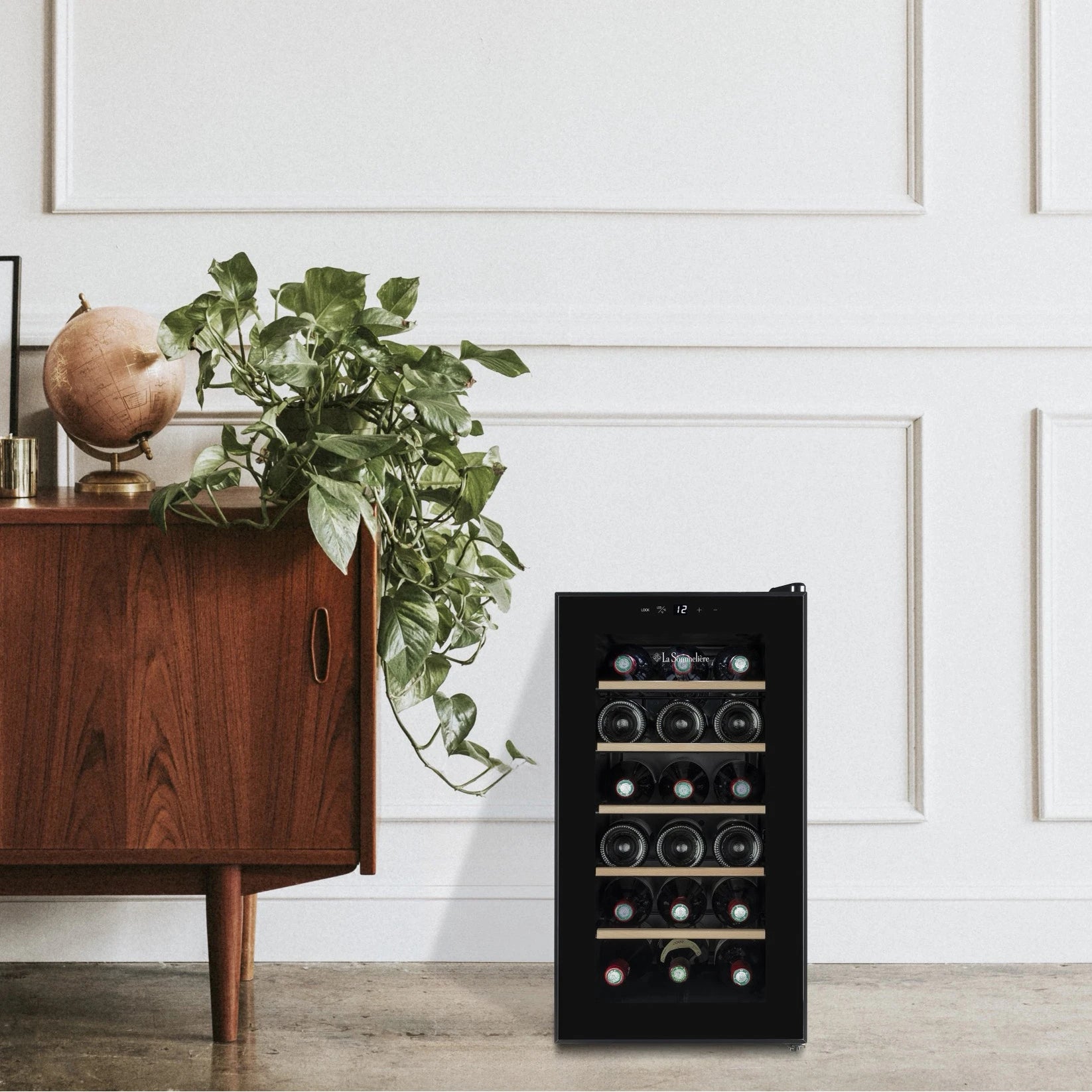
In short, the 0.75L Bordeaux-style bottle is the ideal reference point for designing wine cellars because it's common, consistent, and easy to store. If your collection consists mainly of classic reds bottled in Bordeaux bottles, you can fill your wine cellar to the brim without wasting an inch. Imagine the satisfaction of seeing those neat rows, each bottle resting securely on its wooden shelf, like soldiers in formation ready to be uncorked at the next celebration. 🥰🍾
(Want specific details?) A standard Bordeaux bottle is typically around 28 cm tall and 7.5 cm in diameter, dimensions that set the standard for wine cellars. Below is a table with the approximate measurements of this and other common types of wine bottles to help you better understand the differences:

Table: Approximate dimensions of different types of wine bottles and their relative capacity. (Measurements may vary slightly depending on the manufacturer, but serve as a general guide.)
Other types of bottles and their impact on the capacity of the wine cellar
Not all wine bottles are created equal. In fact, part of the beauty of wine lies in its diversity, and that includes the shapes and sizes of its bottles. What happens when your collection is varied and you have bottles that are wider, longer, or larger than the standard Bordeaux bottle? This is where Burgundy, Champagne, Magnum, Riesling , and other types of bottles come into play. Let's see what they are like and how they affect the actual capacity of your wine cellar.
- Burgundy bottle (0.75 L): This is the classic format from the Burgundy region (typically used for Pinot Noir, Chardonnay, etc.). It's recognizable by its sloping shoulders and more rounded body. It's usually a bit wider than the Bordeaux bottle (approximately 8.5 cm in diameter instead of 7.5 cm). The effect? In the wine cellar, it takes up more space widthwise, so on a shelf where you could fit, say, 7 Bordeaux bottles tightly packed, you might only fit 6 Burgundy bottles without squeezing them. Even so, their height is similar (around 28-29 cm), so there's usually no problem with shelf space. Many wine cellars can accommodate Burgundy bottles, but you'll notice they fill the space more . As a tip, it's best not to alternate them with Bordeaux bottles on the same shelf, but rather group them together to avoid wasted space or bottles of different diameters rubbing against each other.
- Champagne or Cava Bottle (0.75 L) : This is the standard bottle for sparkling wines, designed to withstand the pressure of the bubbles. It's similar in height to a Bordeaux bottle (around 30 cm) but noticeably wider and sturdier (about 8.8 cm in diameter), with thicker glass and a pronounced concave base. In practice, champagne bottles are the "heaviest" on the shelf. In a wine cellar, they require more space and can be difficult to stack efficiently. For example, if your wine cellar has shelves designed for 5 standard bottles per row, you might only be able to comfortably fit 4 sparkling bottles. Furthermore, due to their width, they can sometimes rub against the shelf guides or the door if not positioned correctly. Ideally, they should be placed horizontally and spaced apart , ensuring each one has its own "bubble" of space around it. Some wine cooler models include special shelves or a little more space for champagne, but in others you might need to use the bottom shelf (which is usually a bit taller) for these larger bottles. But seeing those golden champagne bottles resting safely in your wine cooler is a small visual luxury! 🥂
- Riesling bottle (Rhin type, 0.75 L) : Used for many German, Alsatian, or Riesling-style white wines, this bottle is characterized by being taller and more slender than others. It can measure around 35 cm tall and just 7.5 cm in diameter. The problem? The length . In a wine cellar, the depth of the unit is key for these bottles. If your wine cellar isn't very deep, a Rhine bottle placed on its side could hit the door or stick out a bit. Fortunately, many modern wine cellars have approximately 50 cm of internal depth, enough for most Rieslings, but it's worth checking. These long bottles don't take up more space in terms of quantity, but they can be a headache to fit alongside others. Ideally, they should be placed where there is sufficient free space , sometimes on the top or bottom shelf where the internal design allows for that extra length. Visually, their slender shape is beautiful, almost like an organ pipe in your wine cellar. Just remember: if you have a lot of wine, look for wine coolers with good internal depth .
- Magnum Bottle (1.5 L): The queen of celebrations! A magnum is essentially twice the volume of a standard bottle, and its physical size is also considerably larger: approximately 34 cm tall and about 10 cm in diameter. It's equivalent to two 0.75 L bottles, so think of one magnum as taking up the space of two standard bottles (or more) . In wine cellars, magnums present a particular challenge: they don't fit on the regular shelves designed for single bottles. Often, to fit a magnum, you'll have to remove an intermediate shelf and place it in a double compartment. Some larger or high-end wine cellars come with adaptable compartments or shelves for larger formats, and even indicate how many magnums they can hold. But in smaller models, you'll probably only be able to accommodate one or two magnums by taking space from several regular bottles. For example, imagine a wine cellar with 40 bottles full of red wines; if you decide to store a magnum of champagne inside, you might have to sacrifice two or three standard bottles to make room for it. The impact on capacity is significant . However, the Magnum has a special charm: besides looking imposing, many winemakers claim it's the optimal format for aging wine slowly. If your collection includes Magnum bottles of premium wines, it's worth considering a large wine cooler or models specifically designed to store 1.5L bottles. That way, your XXL "treasures" will rest safely. 😉
- Other special formats: Beyond those mentioned above, there are less common bottles such as the Jerezana (used for Sherry wines, approximately 28.6 cm × 7.5 cm, similar in size to a Bordeaux bottle) or the Franconia (also called a Bocksbeutel, typical of certain German wines, very wide and flattened, approximately 22 cm tall but 15 cm wide). These latter bottles are rare in most private collections, but if you own one, keep in mind that its unusual shape can take up valuable space in your wine cellar. For example, a Franconia, being so short and wide, cannot be easily stacked or placed next to cylindrical bottles. In such cases, it might be best to reserve a separate space for it (or display it outside the wine cellar as a conversation piece!). There are also smaller bottles than the standard size, such as the 0.375 L half-bottle or the 0.187 L Benjamin. These, however, are usually not a problem : being shorter or narrower, they fit perfectly in the wine cellar; you could even fit two half-bottles in the space of one standard bottle if the shelf is wide enough. So, if your collection includes dessert wines in half-bottles, for once you'll have plenty of space!
In short, each type of "special" bottle impacts the actual capacity of your wine cellar differently. Wider bottles (Burgundy, Champagne) take up less horizontal space, taller bottles (Riesling) require more depth , and much larger bottles (Magnum) require reconfiguring the space . None of this will prevent you from enjoying your wine cellar, but it's important to anticipate these factors to avoid surprises. Think of your wine cellar like a puzzle: if all the pieces are the same size, you'll fill every corner; if you add some larger pieces, you might need to leave gaps or remove pieces so that everything fits comfortably.
How to calculate the actual capacity with bottles of different sizes
When manufacturers state the capacity of a wine cooler in terms of number of bottles, they assume an ideal scenario : all standard 0.75L Bordeaux bottles. But in reality, few collections are 100% homogeneous. So how can we estimate how many bottles will actually fit in our wine cooler if we mix formats? Here are some practical tips to help you do your calculations realistically:
- Apply the "80% rule" : A simple method recommended by experts is, if you have a varied collection, to subtract approximately 20% from the manufacturer's stated capacity . For example, if a wine cooler says it holds 50 bottles, assume around 40 if you plan to mix Bordeaux with some Burgundies and Champagnes. That extra 20% gives you some leeway so that no bottle is cramped and to handle different sizes without filling it to the brim. It's better to have a little extra space than not enough, right? This way, you can place and remove bottles effortlessly and minimize the risk of scratching labels or hitting glass while arranging them.
- Count large bottles as "double" (or more) : If you already know your collection will have X number of large bottles, adjust your calculation accordingly. A good practice is to consider each Magnum as two standard bottles in terms of space (sometimes even 2.5, due to the spacing they require). You could count Champagne bottles as approximately 1.5 standard bottles in space (since for every two Champagnes, you might lose the space of three standard bottles). You don't need to be too precise, just keep in mind that 10 sparkling wines will take up more space than 10 classic reds. Do a mental calculation: "I have 5 Cavas and 1 Magnum that I want to store, the rest are regular reds... okay, those special ones will take up about the space of 5 + 2 = 7 standard bottles, so I add up my 20 reds = 27 equivalents." If your wine cellar theoretically holds 32 bottles, those 27 actual bottles will probably fit. This little exercise will save you frustration when organizing your wine cellar later.
- Group similar sizes together : When arranging bottles, try not to place very different bottles on the same shelf (for example, a champagne bottle between two thin Riesling bottles), as this wastes space. Instead, put the wider bottles together on one shelf (this way you might be able to fit four in a row without wasted space) and the standard or narrow bottles together on another shelf (making the most of that width). You'll see that this optimizes the actual storage capacity. It also looks neater: each shelf with its "family" of similar bottles creates a harmonious appearance and makes it easier to take one out without moving the others.
- Adjust or remove shelves if possible : Many wine coolers allow you to remove an entire shelf to create more space below. If you plan to store very tall bottles or Magnums, consider sacrificing a shelf. It's better to have ample space for those special bottles than to force them in diagonally or pressed against the door (which could affect the temperature or the airtight seal). Before buying, check the configuration options: a modular wine cooler with removable shelves will give you more flexibility to adapt it to your mixed collection.
- Don't fill the wine cooler to the brim: Although it may sound counterintuitive, for the well-being of your wines, it's beneficial for a little air and cold air to circulate between the bottles. If you add too many bottles, besides making them difficult to handle, you could obstruct the internal circulation of cold air. Therefore, if you have a mix of sizes, don't try to reach 100% capacity. Remember the 80% rule: with the wine cooler full but not saturated, the wines will be more comfortable and the appliance will work optimally (maintaining a consistent temperature and without straining the compressor).
By following these guidelines, you can get a pretty accurate idea of your wine cooler's actual capacity with your particular wine selection. There's always a bit of trial and error involved when arranging bottles—part of the fun of setting it up for the first time is that "wine Tetris"! But with these references, you'll avoid any surprises. And if you end up with a little space left over, well… it's the perfect excuse to add that bottle that's been catching your eye in the store 😉🍾.
Choosing the ideal wine cellar according to your wine collection
Understanding all of the above has a clear objective: to help you choose the perfect wine cellar for your collection and plan for its future growth. At Vinoteca.es, we want you to find your dream wine cellar, and to do so, it's vital to consider not only how many bottles you have, but also what types of bottles they are and your wine buying and consumption habits.
- Think about your current and future collection: Are you a sparkling wine lover and do you usually have several bottles of cava or champagne at home? Or perhaps you're a collector of aged wines, and a magnum of Rioja rests in your cellar waiting for a special moment? Maybe you prefer German white wines in tall bottles, or you like to mix things up with a port in an unusual bottle… Take a quick mental inventory of which bottle formats predominate in your personal wine cellar. And plan ahead: a wine cellar is an investment for years to come. It's advisable to choose a wine cellar a little larger than you think you'll initially need , because your collection will likely grow over time (we all know how quickly wine multiplies at home when we're passionate about it 😅). A wine cellar with extra space will give you the flexibility to accommodate new wines, even if they come in bottles of different shapes. In other words, it's better to have extra space than not enough. Nobody minds having a few free shelves that can be filled on the next visit to Vinoteca.es or on that trip to Tuscany! 😉
- Read the fine print about capacity: On our online store's product pages, you'll always see the capacity expressed in the number of bottles (0.75 L Bordeaux standard). Keep in mind that this is an estimate under ideal conditions. If you have a diverse collection, consider this figure as a guideline . For example, if you see "capacity: up to 18 bottles," and you know that 4 of your bottles are champagne, you might realistically fit 15. Some manufacturers even specify in the manual how many bottles of each type fit (e.g., 14 standard + 4 Burgundy, etc.), but this isn't always the case. This is where your knowledge comes in: thanks to what we've explained, you can translate the standard capacity to your specific situation. Of course, if you have any questions, our experts are here to advise you – we're just a chat or a call away to help you figure out which wine cooler will hold that Brut champagne you love so much or that collection of Burgundies you plan to age.
- Look for features adapted to unusual bottles: If you already know that sparkling wines are your thing, you might want to consider a wider wine cooler or one with height-adjustable shelves. At Vinoteca.es, you can filter by capacity, and keep in mind that larger wine coolers (medium or large) usually offer greater versatility in storage. Some come with modular shelves or baskets for Magnum bottles. Others have a particularly high bottom shelf for larger formats. Read the description: if it mentions compatibility with larger diameter bottles, that's a plus! If not, don't worry; with some planning, a standard wine cooler can house a mixed collection, just perhaps not filling it completely. Also, consider the depth : under-counter models tend to be shallower (because they fit into kitchen cabinets), while freestanding models are usually deeper – better for tall bottles like Riesling.
- Prioritize your favorite wines: Ultimately, your ideal wine cooler is the one that suits what you love to drink. If you're passionate about champagne and know you'll always have 10 bottles of bubbly waiting for the perfect occasion, choose a wine cooler where you can display them comfortably, even if it has slightly less than the advertised total capacity. If you only occasionally store a large bottle, you might not need a special Magnum model, but you would need one with a removable shelf. On the other hand, if practically everything you buy comes in the classic 0.75-liter Bordeaux bottle, then go for it: any wine cooler you like in terms of style and features will do; the advertised capacity will be very close to your actual needs. Just remember to always leave room for those unexpected additions (because there will be some!). As a good winemaker friend of mine used to say: "Buy a wine cooler thinking about the bottles you'll have tomorrow, not just the ones you have today." 🍷✨
- The user experience matters too: Beyond the number, imagine the moment of enjoyment. A slightly larger wine cooler allows you to separate wines by type, better organize your oenological treasures, and access them comfortably. Sometimes it's worth going for that 40-bottle model instead of the 32-bottle one, simply so your bottles can breathe and you can see them all at a glance, neatly arranged. The wine cooler isn't just an appliance; it's the home of your wines. And every wine, big or small, deserves its own space. 💖
In short, the 0.75L Bordeaux bottle is the standard that makes life easier for producers and enthusiasts: thanks to it, we know what we're talking about when measuring the capacity of a wine cellar. Its dimensions have shaped the design of our wine cabinets and serve as a common reference point worldwide. But every wine collection is unique, with bottles of Burgundy, Champagne, Magnums, Riesling... that bring diversity and space challenges. With the information in this guide, you can now translate theoretical capacity into practical terms, make approximate calculations, and, above all, choose the ideal wine cellar at Vinoteca.es that suits your passion for wine. 🏠🍷
Ultimately, what matters is that your wine cellar becomes your favorite spot in the house, a place where you store not just bottles, but dreams, future celebrations, and bottled memories. Whether it's a humble Bordeaux bottle or an imposing Magnum, every bottle you place there will hold special meaning. Choose a wine cellar that allows you to fully enjoy them, without worrying about space, and raise a glass to the wise decision to have planned for those "extra bottles" that will undoubtedly come into your life. Cheers to you and to those wines that await you! 🍷🥂