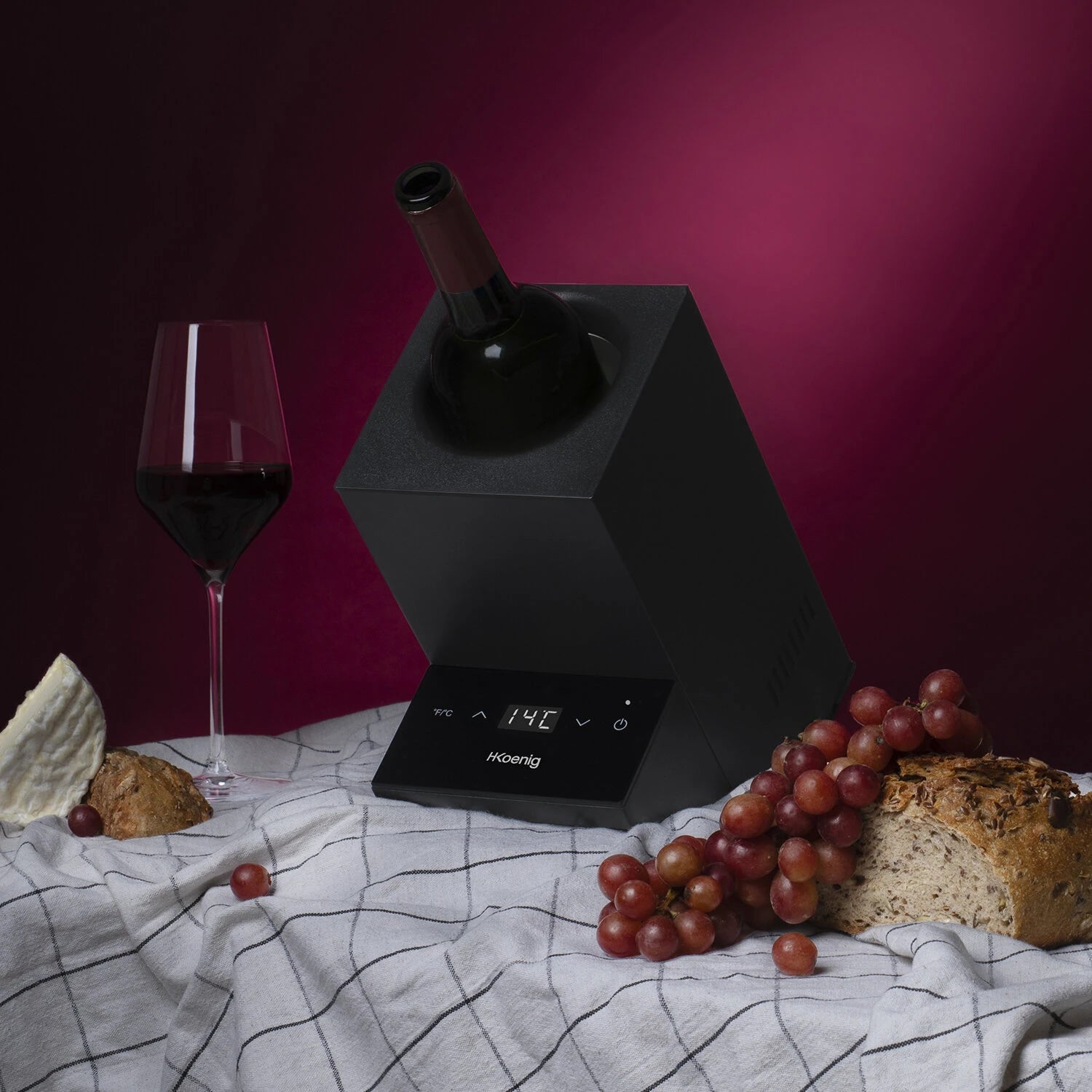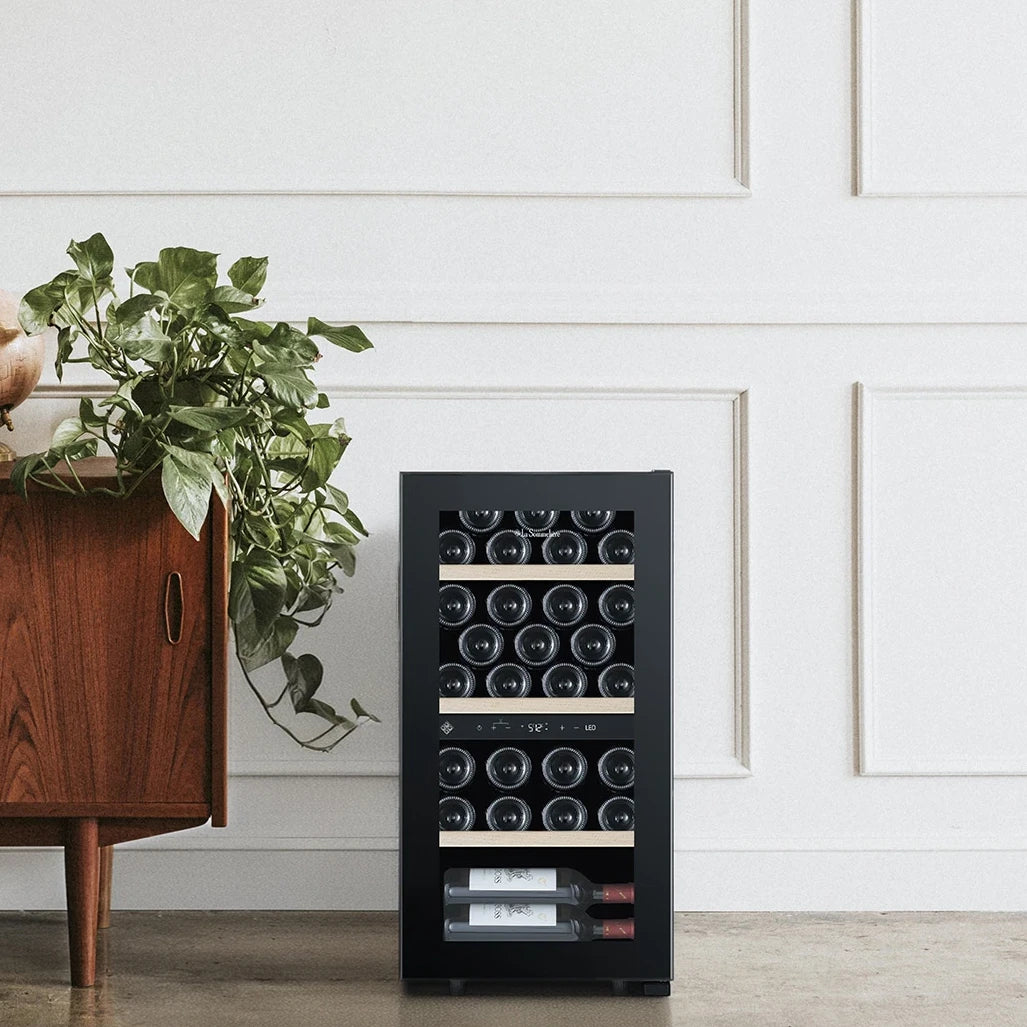
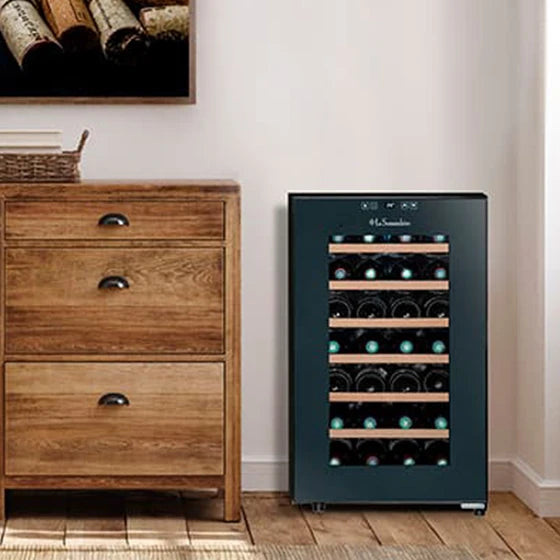

Dinner with friends, a chilled white for the aperitif and a red you have been saving for a special occasion. Choosing a single-zone or dual-zone wine cooler begins with a simple question: do you want to store bottles for later, keep them ready to serve or combine both uses?
Quick answer: a single-zone wine cooler provides one shared temperature setting and can be sufficient for storing reds and whites together, provided the model suits that purpose. A dual-zone wine cooler lets you select two temperatures, within the appliance's limits, and is particularly useful for keeping different wines ready to serve.
The decision depends on how you use it, each compartment's capacity and the model's features. Having more zones does not, on its own, mean better wine preservation.
What one or two temperature zones actually mean
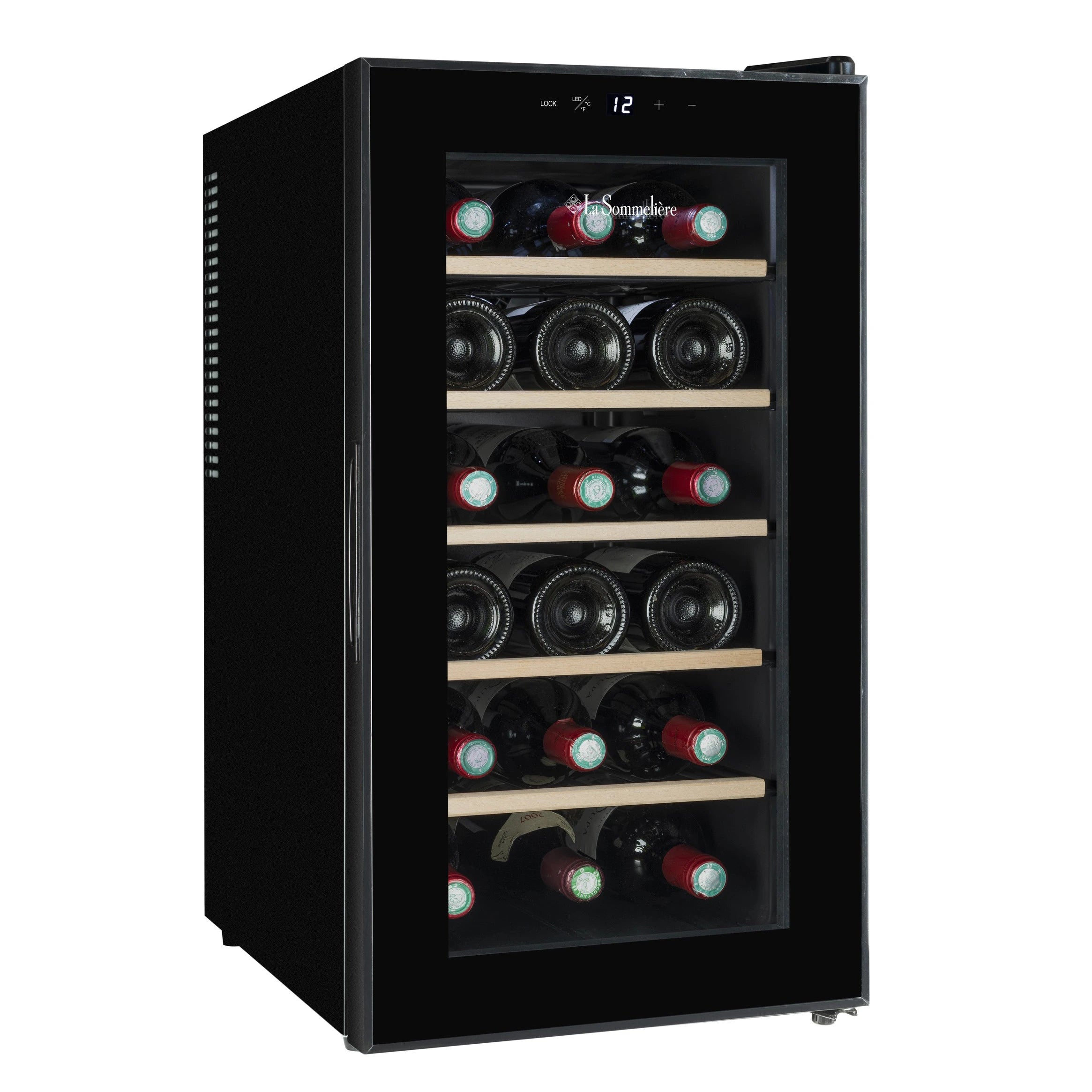
With a single-zone wine cooler, you choose one operating temperature for the storage space. Shelves organise the bottles; they do not create independently controlled temperatures. Small differences may occur within the cabinet, but you should not rely on them to serve two types of wine at specific temperatures.
A dual-zone wine cooler has two compartments with separate temperature settings. This lets you organise bottles around their intended use. Before buying, check the specifications and manual to see whether both ranges are the same, which zone allows the colder setting and whether any conditions apply to the relationship between the two settings.
You may also find multi-temperature cabinets that use a temperature gradient through the height of the appliance. This does not necessarily mean two compartments with independent control. Read how each model works, beyond its commercial name.
Storage and serving: the difference that guides your choice
Storage means providing a suitable environment for bottles throughout the time you keep them. For wines suited to developing in bottle, temperature stability, protection from light, appropriate humidity and reduced vibration matter alongside the chosen setting.
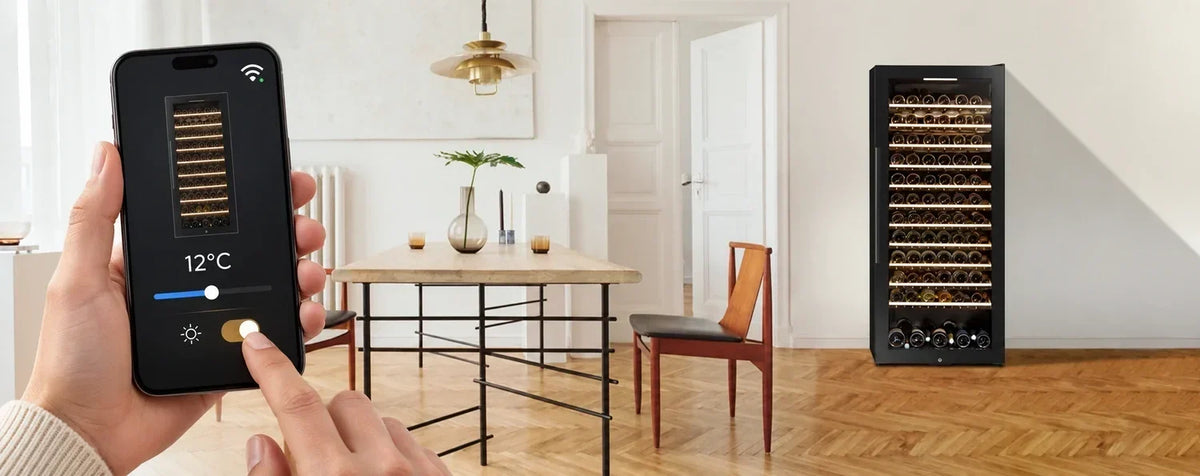
As a reference for ageing wine, a setting of around 12 °C is commonly used in a cabinet designed for that purpose. Reds and whites can share those conditions: wine colour does not mean you must separate them into two zones for storage. Always match the use to the manufacturer's guidance and your collection's needs.
Serving addresses a different need: enjoying each wine at a temperature that suits its style. For example, you might want a white at around 9 °C and a red at around 16 °C. These are illustrative examples rather than a rule for all whites and reds. An oak-aged white, a light red and a sparkling wine may call for different settings.
For more on that subject, read our guide to ideal wine temperatures. Here, the question is how many temperatures you need to maintain at the same time.
Infographic: choose for the way you enjoy wine

When to choose a single-zone wine cooler
One zone can work very well when your priority is clear and you do not need two serving temperatures at once.
- You are keeping a collection for the future. Look for a cabinet suited to ageing and pay attention to stability, bottle protection and usable capacity.
- You mostly drink wines with similar serving needs. If you regularly open whites of a similar style, for example, a shared setting may be practical.
- You prefer to prepare the bottle before opening it. You can store the collection at a common temperature, then chill or let the selected wine warm slightly before serving.
Example: you own 40 bottles of red and white wine, but only open one or two at the weekend. A single-zone ageing cabinet may meet your needs without dividing the space into compartments you will not fully use.
Explore our single-zone wine coolers and compare each appliance's intended purpose. The ability to select 12 °C does not, by itself, establish that a model is designed for years of ageing.
When a dual-zone wine cooler is worthwhile
Two zones add convenience when you alternate between wines with different serving temperatures and want to reduce preparation time.
- You frequently serve whites and reds. Dedicate one compartment to wines you prefer more chilled and the other to wines served at a higher temperature.
- You host guests and open several bottles. Keeping two groups ready makes it easier to organise the aperitif and the meal.
- You want to combine ageing with regular drinking. This may be possible if the model allows the necessary settings and each zone has enough room for your collection.
Example: you regularly keep whites for weekdays and reds for dinner. Two settings, such as 9 and 16 °C where the appliance permits them, may suit that routine. You do not need an equal split: choose a layout that reflects the bottles you actually buy.
Our dual-zone wine cooler collection offers different capacities and formats to compare. Check each compartment's details before deciding on the basis of total bottle capacity.
Single-zone versus dual-zone: a practical comparison
| Consideration | One zone | Two zones |
|---|---|---|
| Selected temperatures | One shared setting. | Two settings, within the model's limits. |
| Ageing reds and whites | They can share conditions in a suitable cabinet. | Separating by colour is not essential. |
| Two serving temperatures | Some bottles need preparation outside the cabinet. | Two groups can stay ready to serve. |
| Organisation | Space with a shared temperature setting. | Capacity divided between compartments. |
| Energy use and noise | Compare each model's specifications. | Zone count alone does not determine either. |
What to check before buying
1. The temperature range of each zone
Do not assume both compartments can be set to any temperature. Some appliances have different ranges, while others offer more flexibility. Also check whether the manufacturer requires one zone to be colder than the other or specifies a particular difference between settings.
2. Usable capacity and how it is divided
Consider your actual collection: how many whites, reds and sparkling wines you keep, their bottle formats and how much space you want for future purchases. A 40-bottle dual-zone cooler does not necessarily provide 20 spaces in each zone. Wider bottles and shelf layouts can also change the advertised capacity. Our guide to bottle sizes and wine cooler capacity will help you calculate it.
3. Installation and room temperature
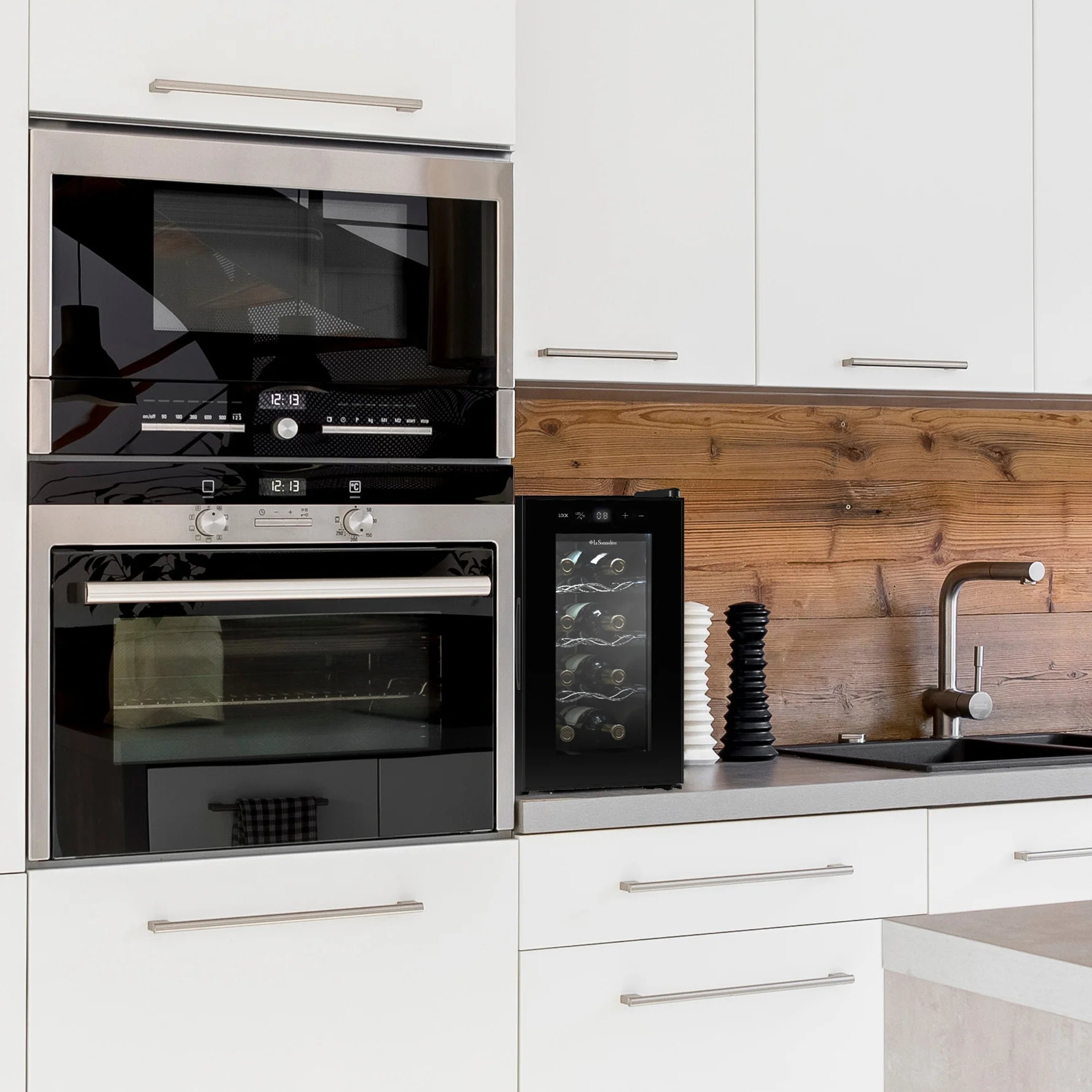
Choose freestanding, under-counter or column installation according to your project and the manual. Check dimensions, ventilation, door opening and permitted ambient conditions. If you are incorporating it into a kitchen, start with our built-in wine coolers and read our guide to where to install a wine cooler.
4. Energy use, noise and ageing features
Compare declared annual kWh and noise levels for models with similar capacities and purposes. For an ageing collection, also review protection from light, humidity management and measures to reduce vibration. To estimate running costs, read how much electricity a wine cooler uses.
Common mistakes when choosing the number of zones
- Assuming reds and whites must be separated. They can share a suitable storage temperature; separating them mainly provides flexibility of use.
- Buying on total capacity alone. With two zones, the capacity of the compartment you will use most matters.
- Confusing two displays with two independent zones. Verify the operation described in the specifications and manual.
- Expecting a newly added bottle to be ready immediately. Wine needs time to reach serving temperature, even when the setting already appears on the display.
- Choosing more functions than you will use. Define your routine first, then compare models.
Frequently asked questions about single-zone and dual-zone wine coolers
Can I store white and red wine in a single-zone wine cooler?
Yes. In a cabinet suited to storage, both can share a common temperature. Before opening a bottle, bring it to a serving temperature appropriate to its style.
Does a dual-zone wine cooler preserve wine better?
Not necessarily. Preservation depends on the appliance's features and installation. Two zones organise two temperatures; they do not replace stability or the conditions needed for ageing.
Can I set both zones to the same temperature?
It depends on the model. Some allow equal settings, while others impose relationships between the zones. Check the manual if you want to use the whole cabinet at a shared storage temperature.
Is the coldest zone always at the top?
No. Position and ranges vary according to the appliance's design. Organise bottles following the manufacturer's instructions.
Do two zones mean two compressors?
You cannot infer compressor count from the number of zones. Check the technical specifications if that detail matters to your choice.
What if I need three temperatures?
Consider whether you really need to maintain three groups at once and explore our three-zone wine coolers. Preparing some bottles before serving may also be sufficient, depending on your routine.
Choose a wine cooler that fits the way you enjoy wine
Start with three details: which wines you buy, how many bottles you keep and when you want to open them. This makes it easier to choose the capacity and zones you will actually use.
Discover our single-zone wine coolers and dual-zone wine coolers. At Vinoteca.es, we help you compare options to care for your collection and enjoy every bottle at the right moment.